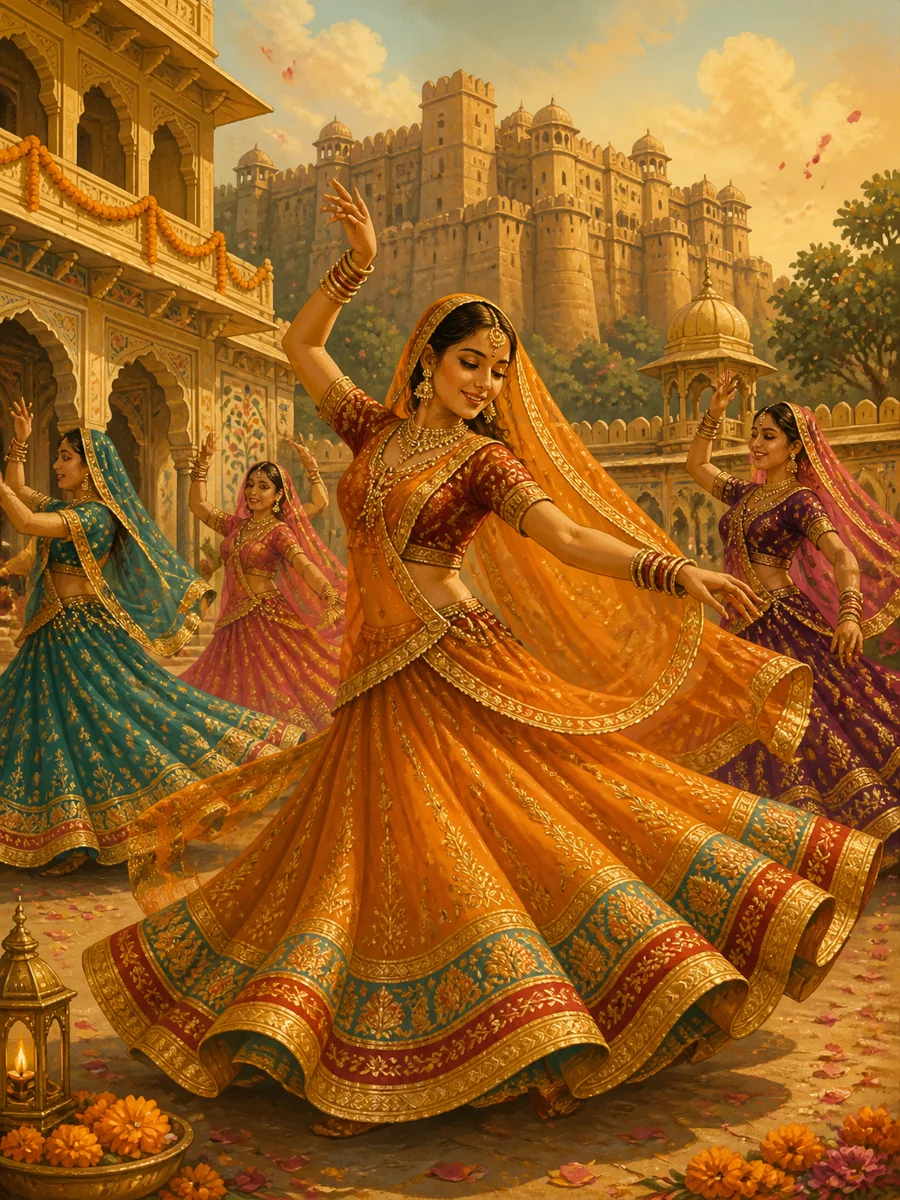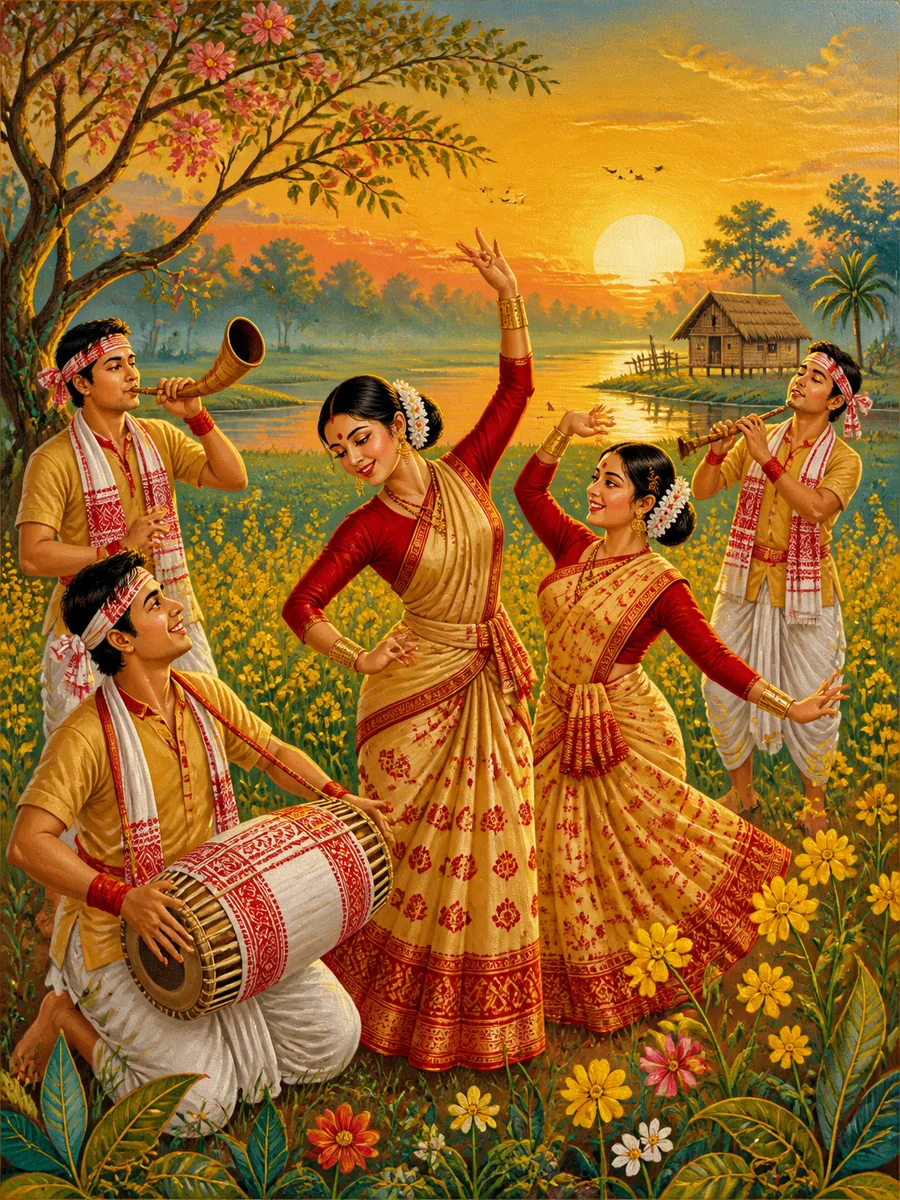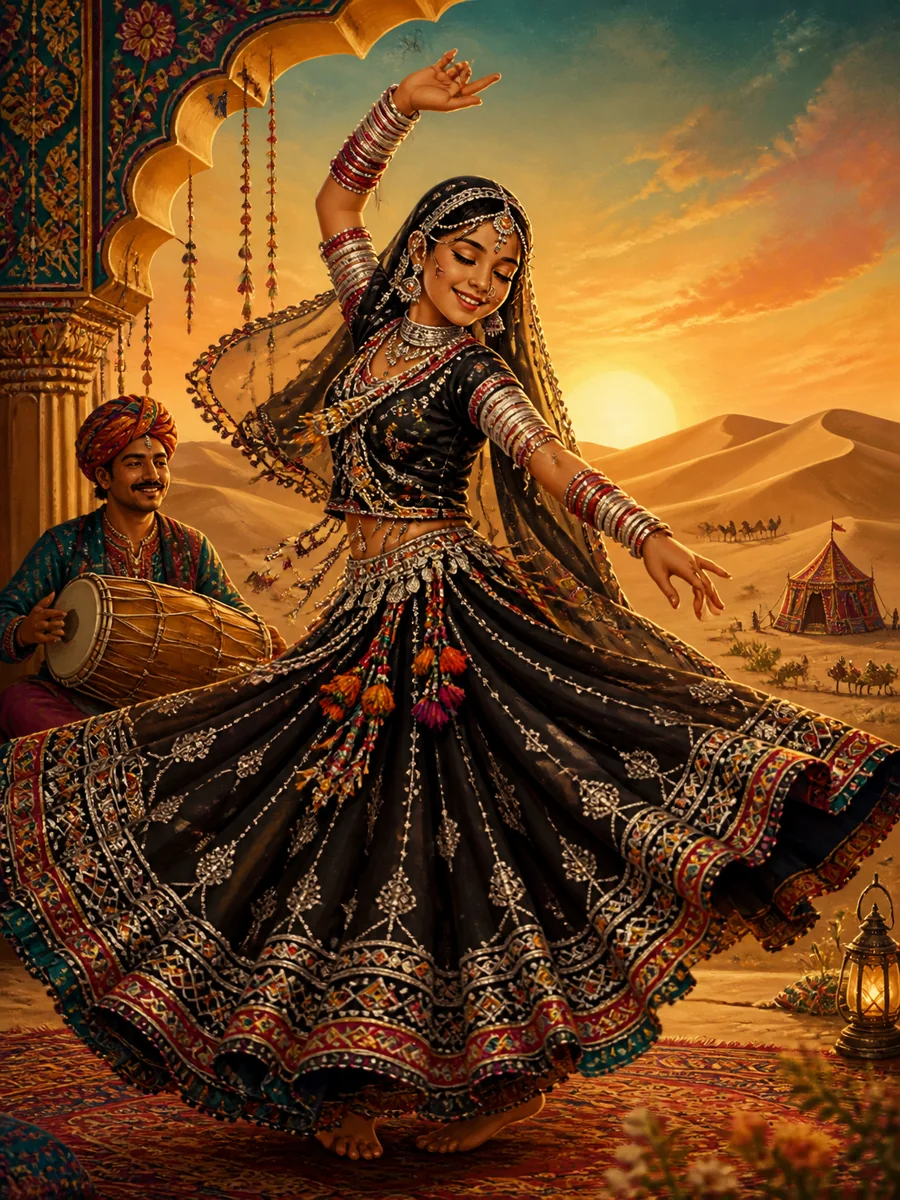
Garba comes from Gujarat. It is danced during Navratri, the nine nights of a festival for the goddess.
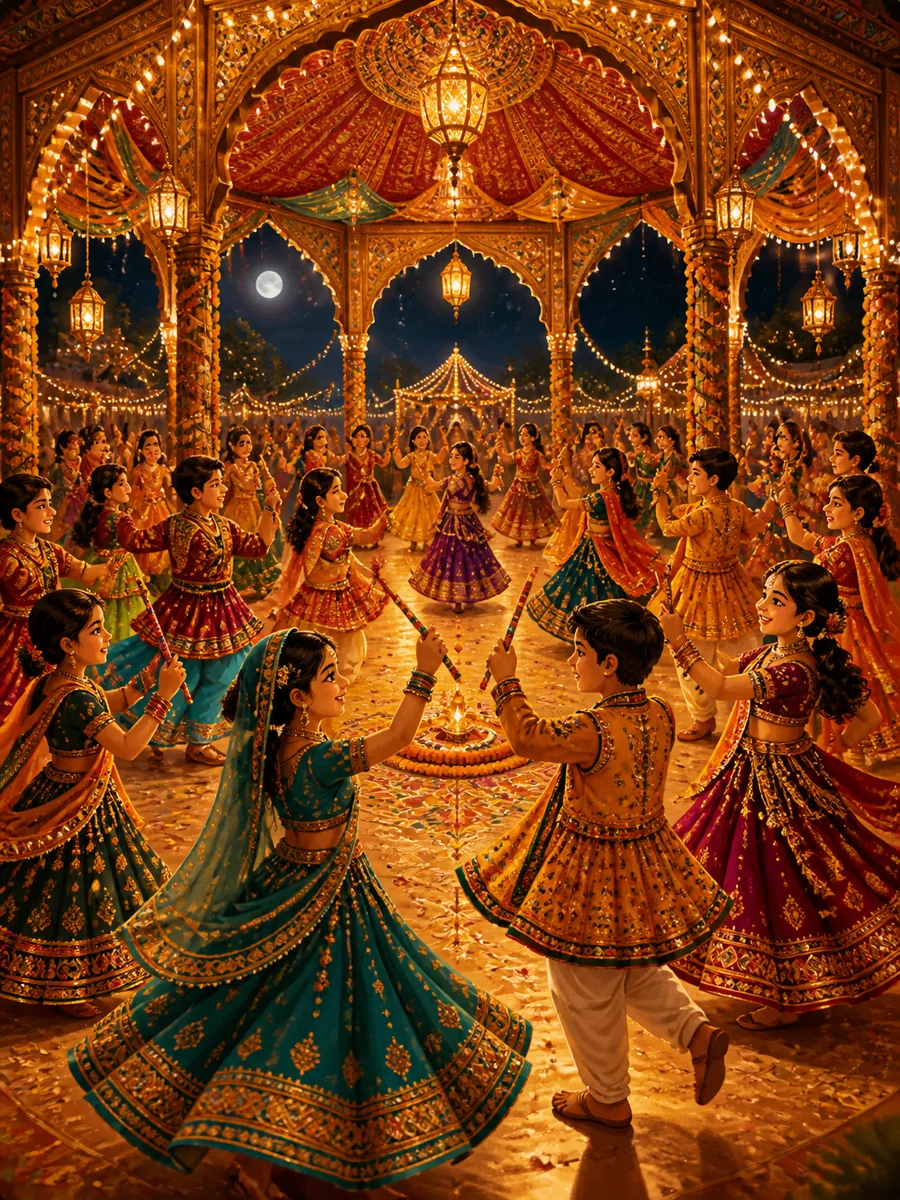
People dance in big circles around a lamp or a picture of the goddess. The circle keeps moving.
The word garba comes from garbo, a clay pot with holes and a lamp glowing inside it.
Dancers clap in rhythm and move in time. They wear bright skirts with mirror-work, called chaniya cholis.
There is also dandiya raas, which is danced with pairs of painted sticks that click together.
In 2023, UNESCO added garba to its list of living heritage.

Garba: Circles for Nine Nights
Whole neighbourhoods dancing in big circles around a glowing lamp.
Learn more
Facts, a quiz and words to knowDid you know?
- Navratri means nine nights.
- In 2023, UNESCO added garba of Gujarat to its list of living heritage.
- Dandiya raas is danced with pairs of painted sticks.
- The garbo is a clay pot with holes and a lamp inside.
Quick quiz
1How many nights is Navratri?
- Nine
- Five
- Three
Show the answer
A. Nine. Navi means nine, ratri means night.
2What do dandiya dancers hit together?
- Painted sticks
- Cymbals
- Plates
Show the answer
A. Painted sticks. Pairs of sticks click in rhythm.
3Which state does garba come from?
- Gujarat
- Odisha
- Karnataka
Show the answer
A. Gujarat. Garba is from Gujarat.
Words to know
- Navratri
- The nine nights of a festival for the goddess
- Garbo
- A clay pot with holes and a lamp inside
- Dandiya
- A painted dance stick
- Chaniya choli
- A bright skirt and top with mirror-work
Think and do
Talk about it. Why is a circle a good shape for a dance?
Try it. Make a circle with friends and clap a pattern. Pass the pattern round the circle.
Remember: Moving together.
Up next
Written for children from well-known public sources, including UNESCO’s lists of living heritage. Every region has many more folk dances than these seven, and each dance is danced a little differently in different places.