
Folk Dances of India for Kids
Seven short stories on the folk dances of India
 Read it, draw it, colour it · Rangoo · rangooo.com
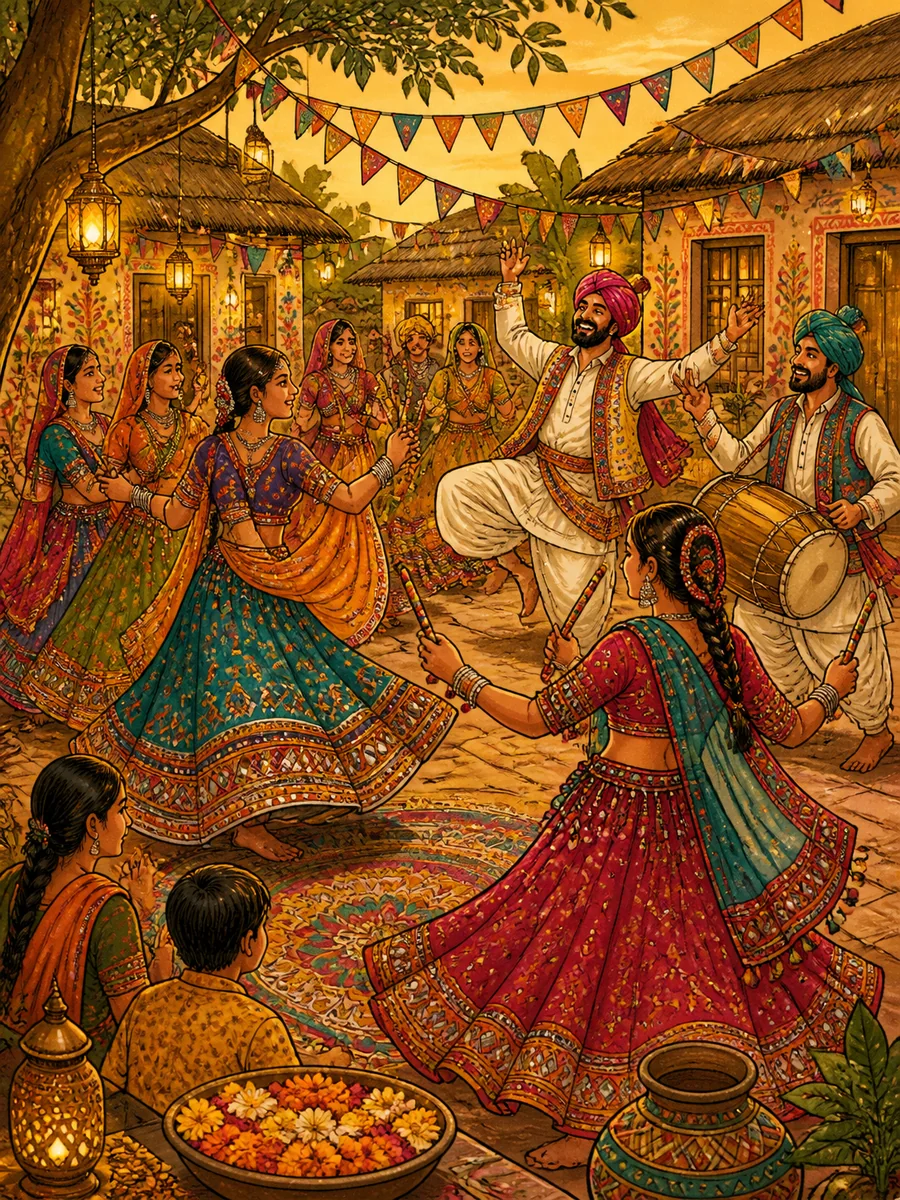
Bhangra: Jump for the Harvest
1Bhangra comes from Punjab. Farmers there began it to celebrate the harvest, around the festival of Baisakhi.
2The music comes from a big drum called the dhol. Boom, boom, boom! You can feel the beat in your chest.
3Dancers jump high, kick, bounce their shoulders and raise their arms. They sometimes shout “balle balle!”
4They wear colourful turbans and kurtas, and the dance gets faster and faster.
5Today, people dance bhangra at weddings and parties all over the world.
6Next time you hear a strong beat, try bouncing your shoulders and clapping in time.
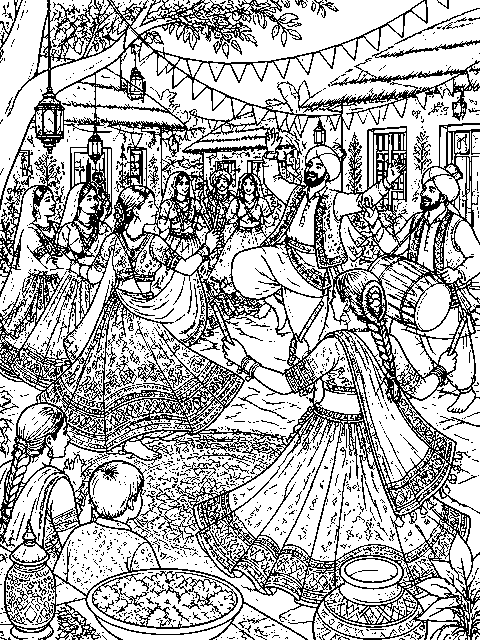
Colour me: Bhangra: Jump for the Harvest
Garba: Circles for Nine Nights
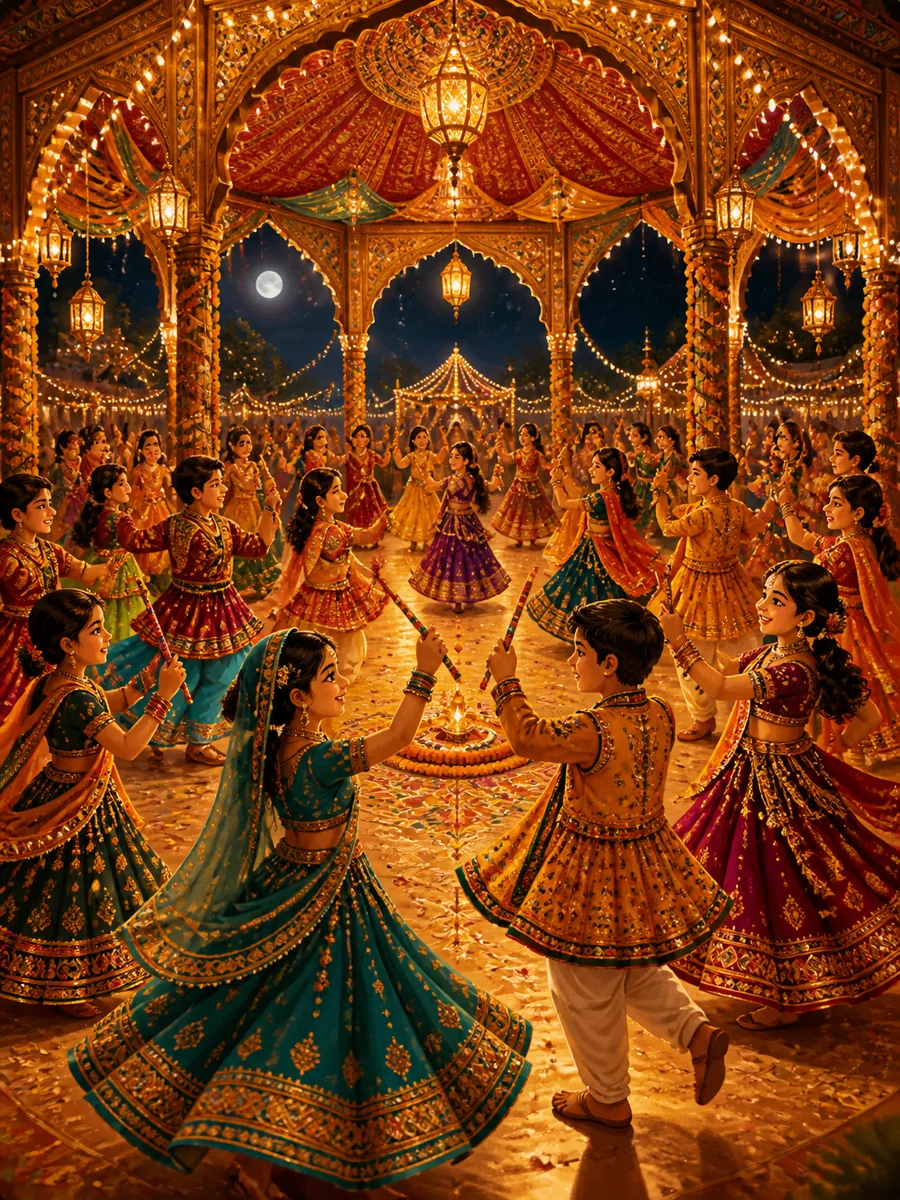
1Garba comes from Gujarat. It is danced during Navratri, the nine nights of a festival for the goddess.
2People dance in big circles around a lamp or a picture of the goddess. The circle keeps moving.
3The word garba comes from garbo, a clay pot with holes and a lamp glowing inside it.
4Dancers clap in rhythm and move in time. They wear bright skirts with mirror-work, called chaniya cholis.
5There is also dandiya raas, which is danced with pairs of painted sticks that click together.
6In 2023, UNESCO added garba to its list of living heritage.
Ghoomar: Skirts Like Flowers
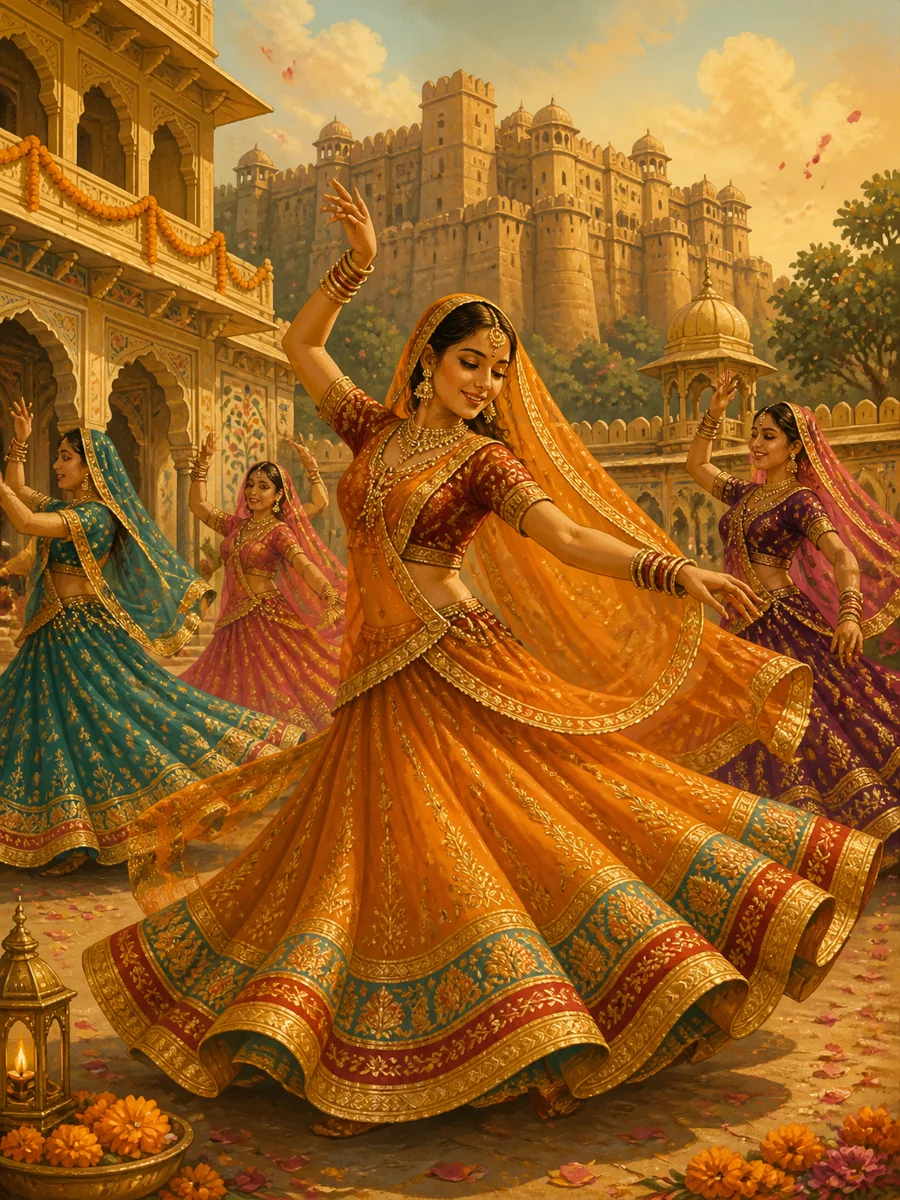
1Ghoomar is a dance from Rajasthan. The word ghoomna means to whirl or turn.
2The Bhil community first danced it. Later, the royal Rajput families of Rajasthan loved it too.
3Women turn slowly and gracefully so that their long skirts, called ghagras, open out like big flowers.
4They often wear veils and silver jewellery.
5Ghoomar is danced at weddings and festivals, and to welcome new brides.
6Try turning slowly with your arms out. How wide can you make your sleeves flare?
Bihu: Welcoming the New Year
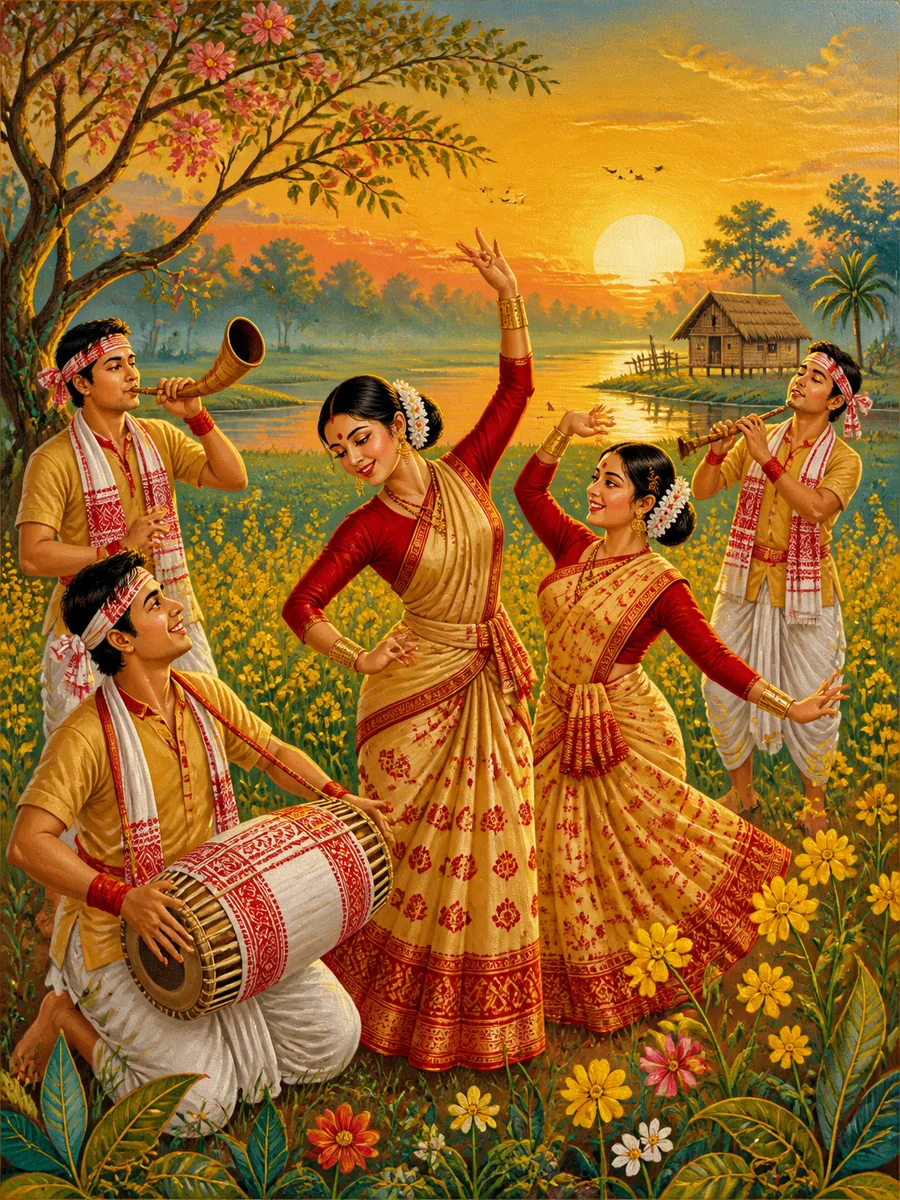
1Bihu is a festival from Assam. Rongali Bihu in April marks the Assamese new year and the start of spring.
2Young people dance in fields and courtyards, with fast steps, swaying hips and swinging arms.
3The music comes from the dhol drum, the pepa (a pipe made from buffalo horn) and the gogona, a small bamboo instrument played against the teeth.
4Dancers wear red and cream clothes made of Assam’s own silk.
5The steps are quick and happy, like birds in spring.
6Bihu songs welcome the new year, the new crops and each other.
Kalbelia: The Snake Dance of the Desert
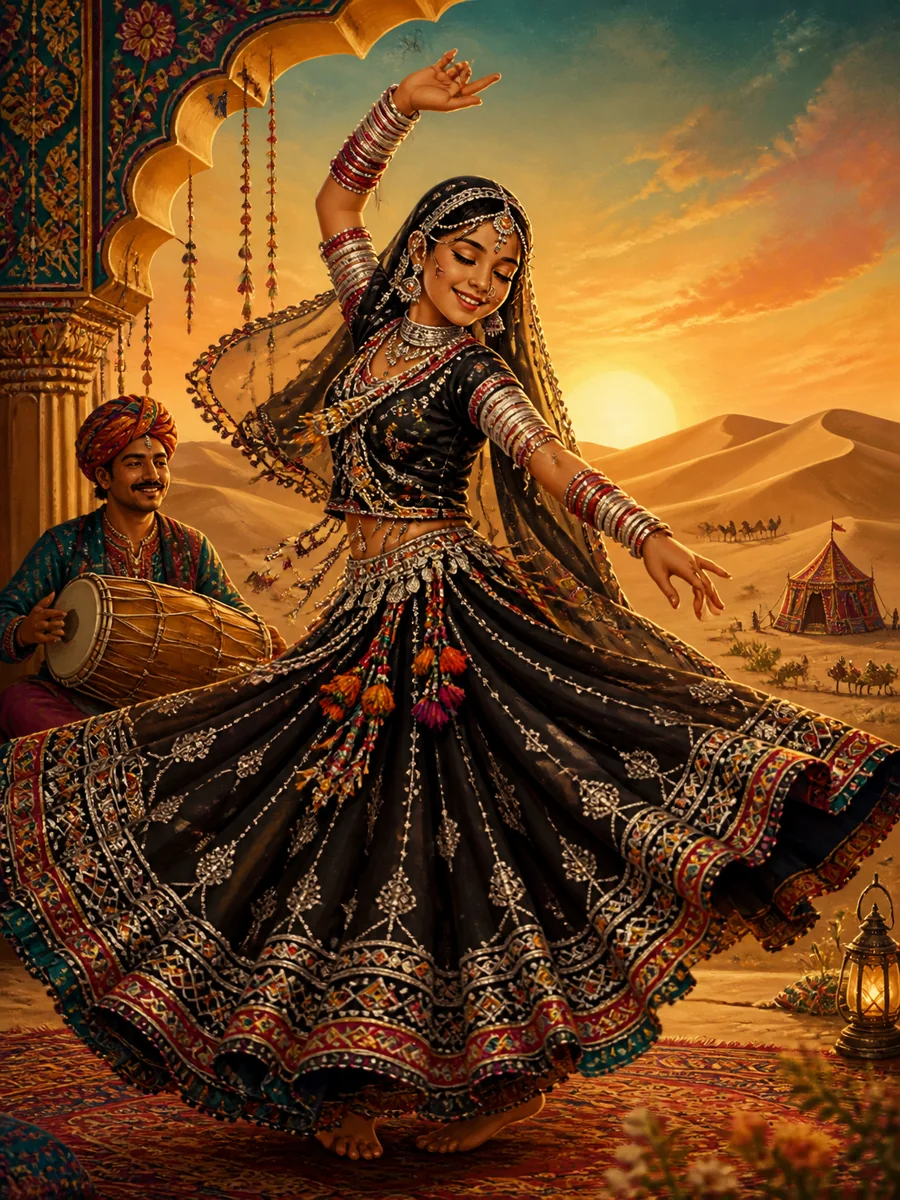
1Kalbelia is a dance from Rajasthan. The Kalbelia community were traditionally snake charmers.
2Their women dance in swirling black skirts, moving with a snake’s grace.
3The skirts are decorated with mirror work and bright embroidery.
4The music comes from the pungi, the pipe that snake charmers play, and the daf, a frame drum.
5The dancers spin fast and bend low, and the songs often tell stories.
6UNESCO lists Kalbelia songs and dances as part of the world’s living heritage.
Chhau: Masks, Leaps and Somersaults
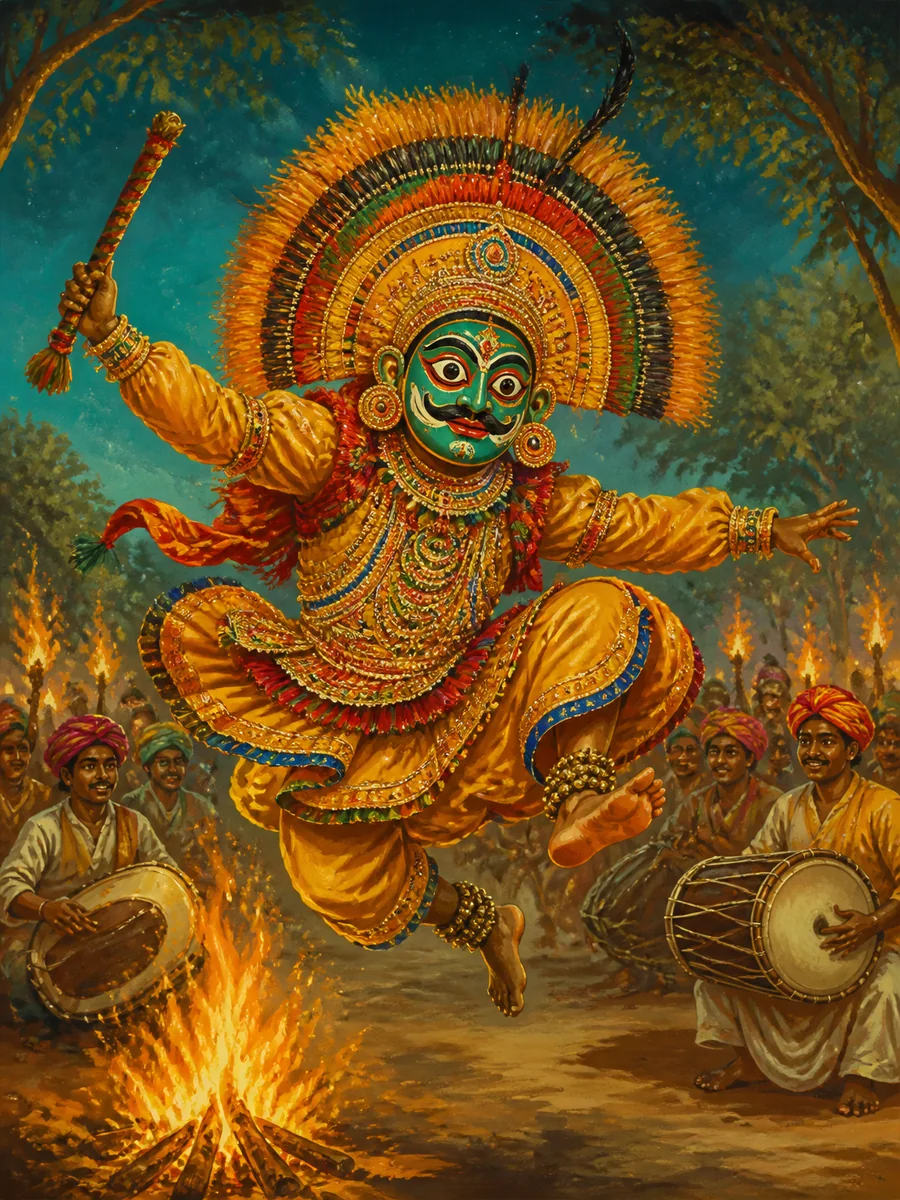
1Chhau is a dance from the east of India. It mixes dancing with martial arts.
2There are three styles: Purulia in West Bengal, Seraikela in Jharkhand and Mayurbhanj in Odisha.
3In Purulia and Seraikela, the dancers wear large painted masks. In Mayurbhanj, the dancers show their own faces.
4They leap, spin and somersault to tell stories from the Ramayana and the Mahabharata.
5Drums and the shehnai, a reed pipe, play the music.
6Chhau is often performed at spring festivals. UNESCO added it to its list of living heritage in 2010.
Yakshagana: A Play That Lasts All Night
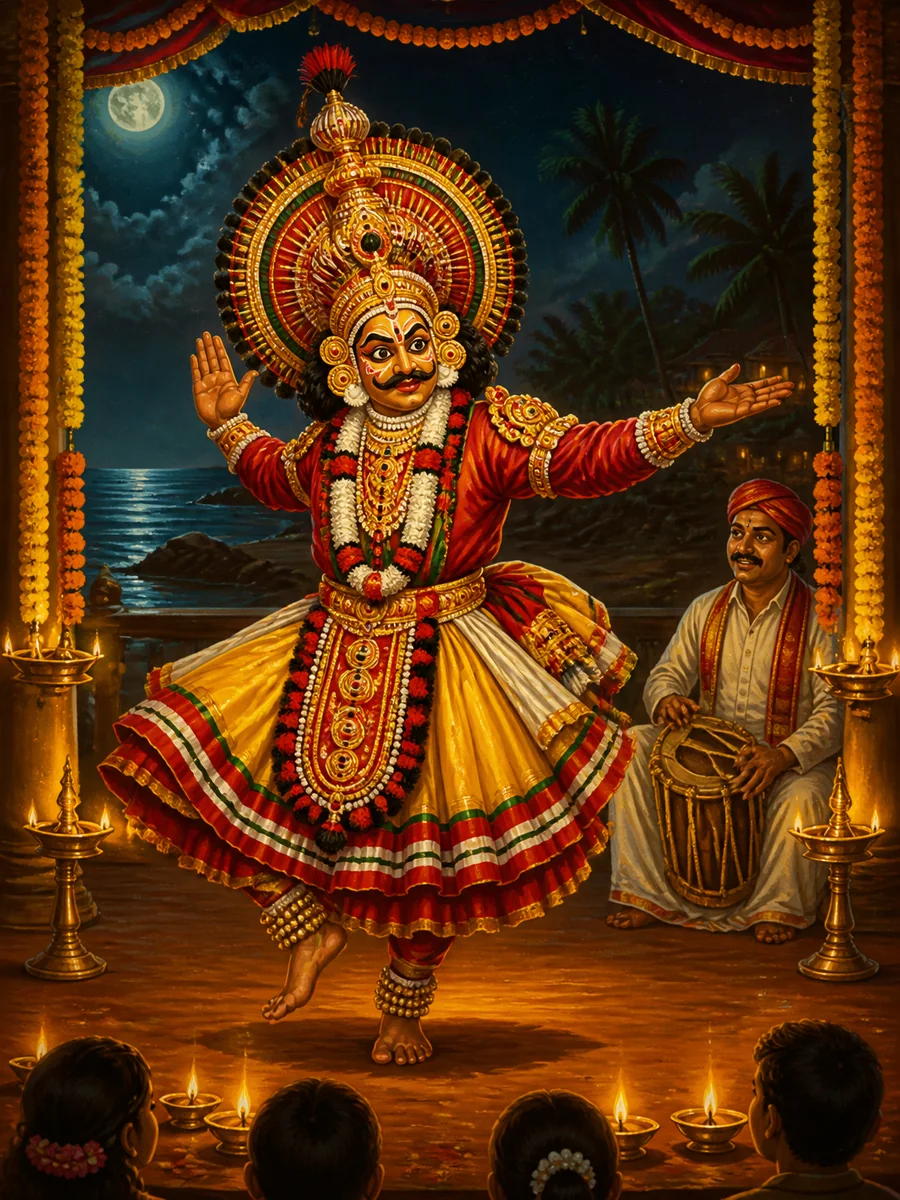
1Yakshagana is a dance-drama from the coast of Karnataka.
2It is traditionally performed in the open air, through the night, until sunrise.
3A singer called the bhagavata tells the story, while the actors dance and speak.
4Kings and demons wear huge, shining headdresses and bright painted faces.
5A drum called the chende booms to the beat.
6Imagine watching a play that lasts all night! A good story is worth staying up for.
The End
More stories to read, draw and colour at rangooo.com