English
Start a book
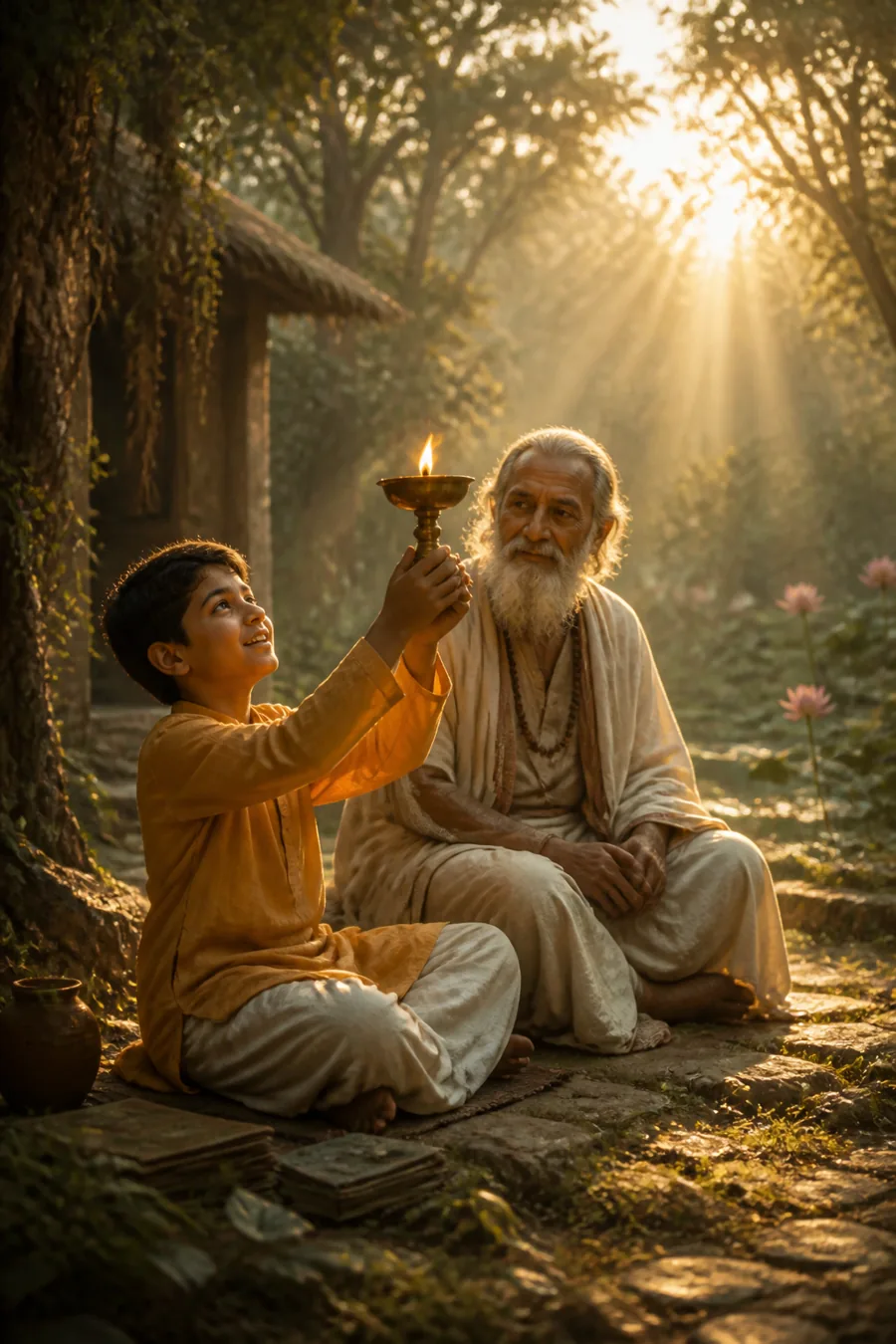
A teacher sits beside a boy holding a lit lamp, under a sun with long rays
Episode 8 of 8 · The Upanishads

The Upanishads: Light and Truth

  • 1 min read
  • Ages 3–8
  • 6 pages
  • Free

Students sit close to their teachers and ask: who am I, and what is true?

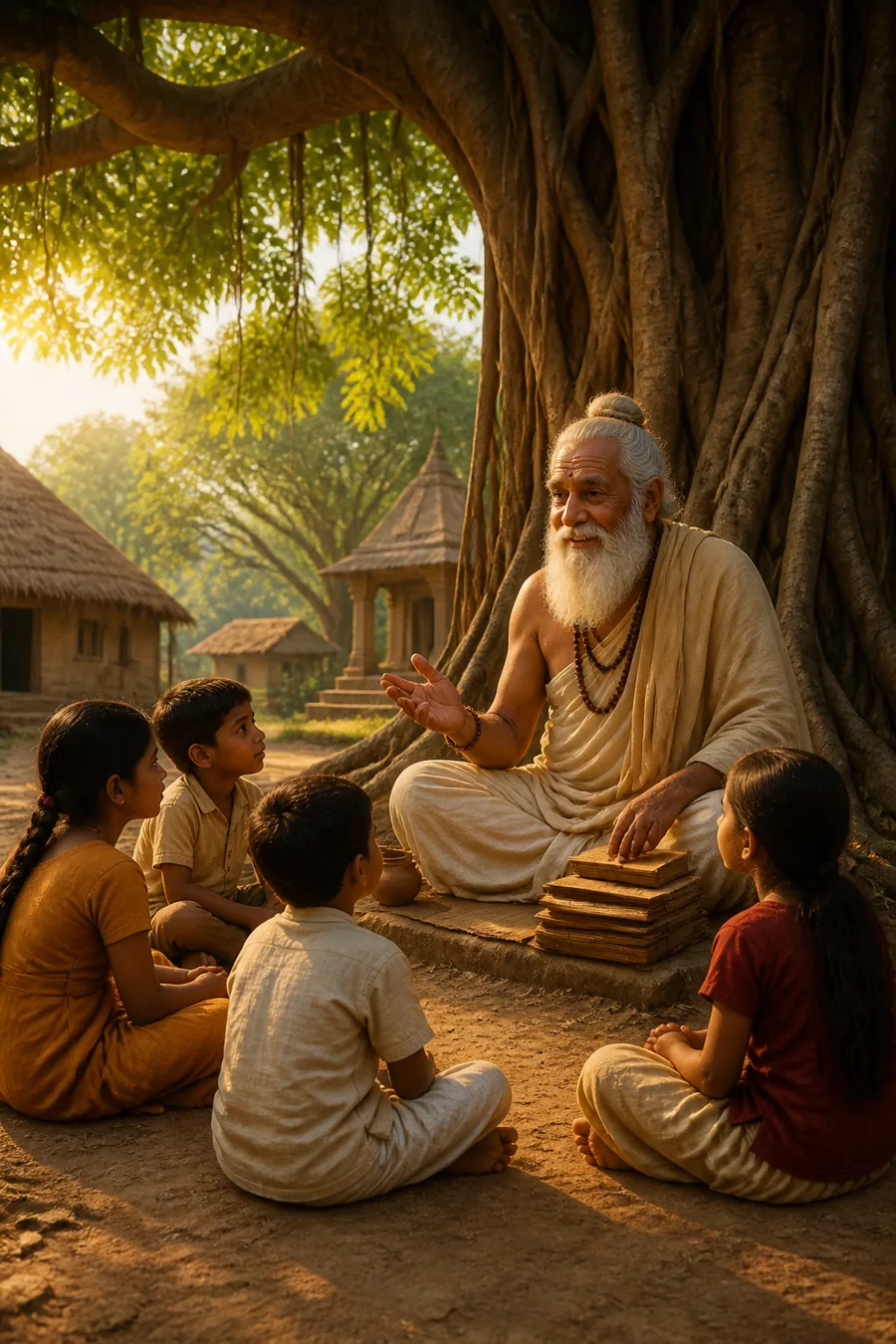
  1. The word Upanishad means sitting close to a teacher. The Upanishads are talks between teachers and students, and they come near the end of the Vedic books.

  2. They ask big questions. Who am I? What is true? What is the world made of?

  3. In one story, a brave boy named Nachiketa goes to meet Yama, who knows the secrets of life and death. Nachiketa waits patiently at his door, so Yama offers him three wishes.

  4. Nachiketa does not ask for toys or gold. He asks to understand the biggest truths. Yama is very impressed by a child who wants to learn.

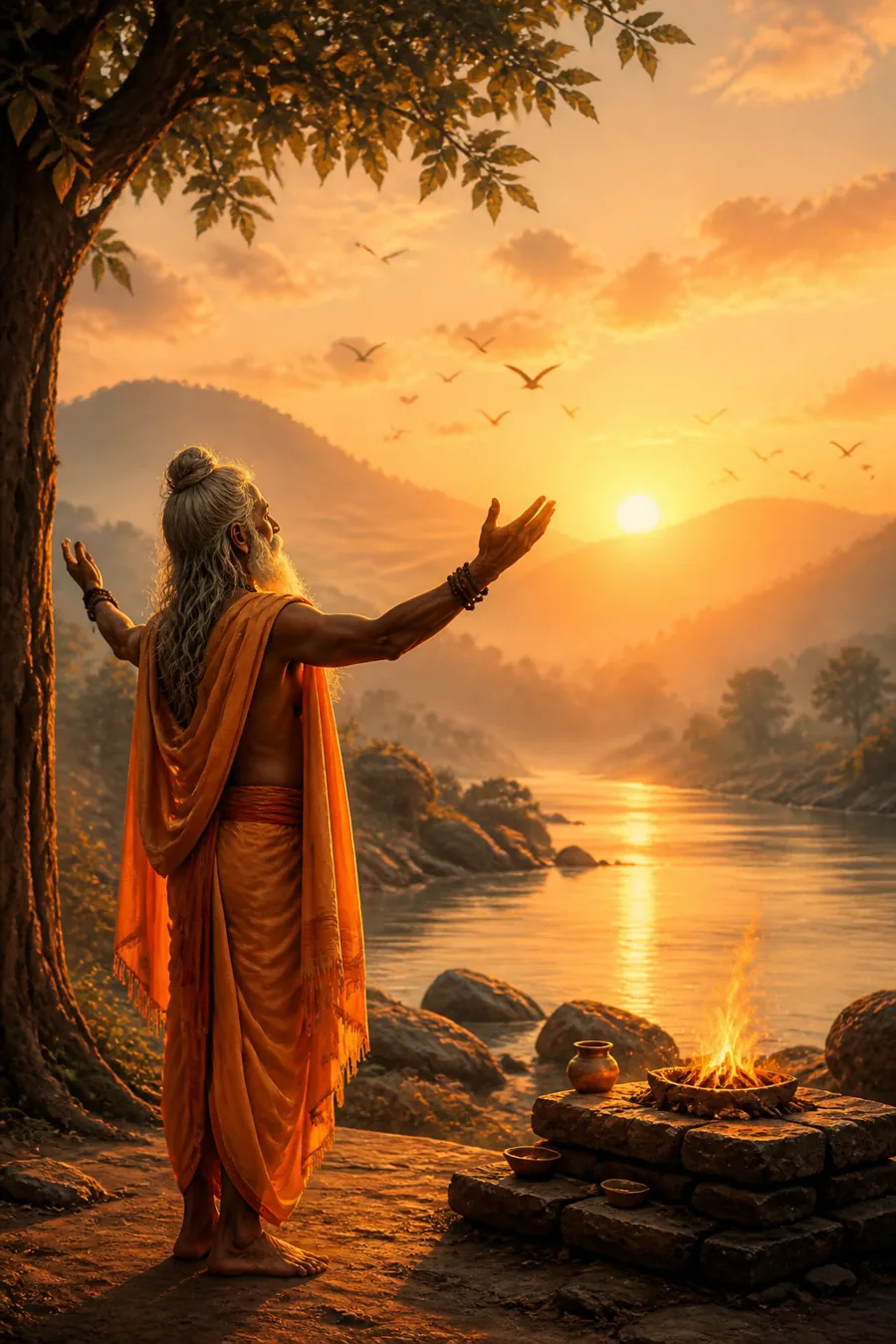
  5. A famous prayer from the Upanishads says: lead me from untruth to truth, from darkness to light.

  6. India's national motto, Satyameva Jayate, which means truth alone wins, comes from an Upanishad too.

The big ideaHonesty and curiosity are like a lamp that lights up our way.
Talk about it: What do you think the light in the prayer means? Is it only the light of a lamp?
Learn more

Facts, a quiz and words to know

Did you know?

  • Upanishad comes from upa (near), ni (down) and shad (sit): to sit down near a teacher. These are lessons told in small groups.
  • About 200 Upanishads are known. A traditional list names 108, and ten to thirteen are called the "principal" Upanishads, such as the Isha, Kena, Katha, Mundaka, Chandogya and Brihadaranyaka.
  • The Upanishads are also called Vedanta, "the end of the Veda", because they come at the end of each Veda.
  • Nachiketa's story is in the Katha Upanishad. Yama gave him three wishes. Nachiketa chose peace for his father, a sacred fire, and to understand life and death.
  • The Mundaka Upanishad has a picture of two birds on one tree. One bird eats the fruit, and the other quietly watches. It is a way of talking about our busy side and our calm side.
  • The Mandukya Upanishad has only twelve verses, which makes it the shortest of the principal Upanishads.
  • The line "Satyameva Jayate", truth alone triumphs, is from the Mundaka Upanishad. It is written under the lions of India's national emblem.
  • In the 1600s, a prince named Dara Shikoh had the Upanishads translated into Persian, and that helped them travel to readers around the world.

Quick quiz

  1. 1What does the word Upanishad mean?

    1. Sitting near a teacher
    2. Fire and smoke
    3. A long journey
    Show the answer

    A. Sitting near a teacher. Upa, ni, shad: sit down near.

  2. 2Who did Nachiketa go to meet?

    1. Yama
    2. Indra
    3. Agni
    Show the answer

    A. Yama. Yama, who knows the secrets of life and death.

  3. 3How many wishes did Yama offer Nachiketa?

    1. One
    2. Three
    3. Seven
    Show the answer

    B. Three. Three wishes.

  4. 4Where does "Satyameva Jayate" come from?

    1. Mundaka Upanishad
    2. Panchatantra
    3. A song of the Samaveda
    Show the answer

    A. Mundaka Upanishad. It means "truth alone wins".

  5. 5What is another name for the Upanishads?

    1. Vedanta
    2. Samhita
    3. Ayurveda
    Show the answer

    A. Vedanta. Vedanta: the end of the Veda.

Words to know

Upanishad
A lesson learned by sitting close to a teacher
Vedanta
"The end of the Veda", another name for the Upanishads
Atman
The self, who you are inside
Satya
Truth
Yama
The one who knows about death and what is right
Shanti
Peace

Think and do

Talk about it. Nachiketa asked for understanding, not toys. What is something you want to understand better?

Try it. Be a truth detective for a day. Notice a moment when telling the truth was a little hard. How did it feel afterwards? Then sit still for one minute and listen to your breath.

Remember: Honesty and curiosity.

Up next

Written for children from well-known scholarly and public sources, including UNESCO and the texts themselves. Nobody knows exactly when the Vedas were composed, so we say 'more than 3,000 years ago'. Families follow the Vedas in different ways; this series simply tells what the books are and what they say.

Rangooo

Draw and paint

Colour a drawing with a pencil, or start on a blank page. Save it or share it.