
The Vedas for Kids
Eight short stories on the four Vedas
 Read it, draw it, colour it · Rangoo · rangooo.com
What Is a Veda?
1Long, long ago, in India, there were no printed books. People wanted to keep their best songs and wisest ideas safe for the future.
2Wise people called rishis (say RISH-ees) watched the world and thought about it very carefully. Then they put their ideas into beautiful poems and songs.
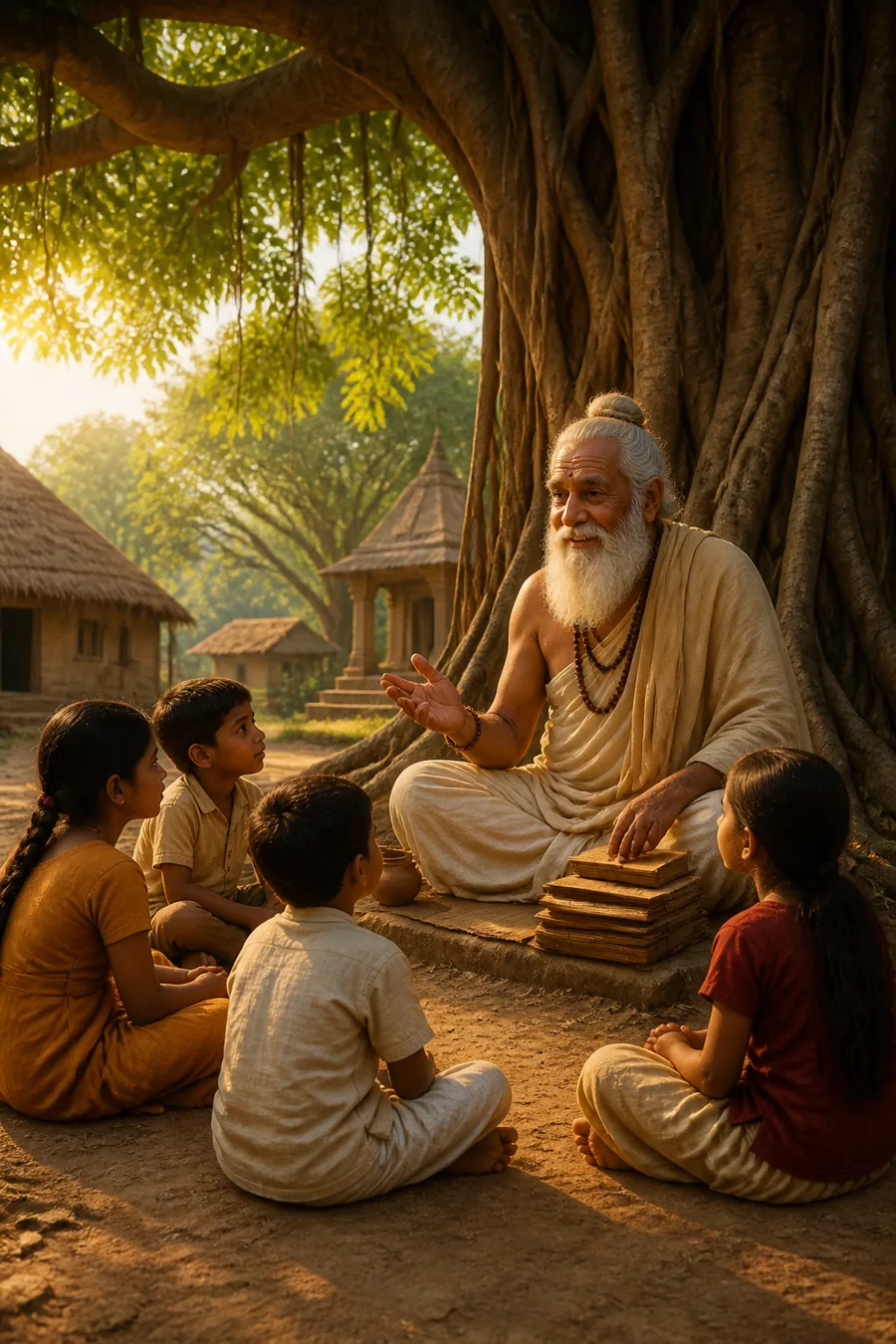
3The word Veda means knowledge. The Vedas are some of the oldest writings in India. They are more than 3,000 years old.
4There are four Vedas: the Rigveda, the Samaveda, the Yajurveda and the Atharvaveda. In this series we will meet them all.
5Nobody knows exactly when each one was made, because they were spoken and sung for a very long time before they were ever written down.
6Children learned them by sitting near a teacher, listening and saying the words aloud, again and again, until they knew every word by heart.
Colour me: What Is a Veda?
The Rigveda: Songs to the Dawn and Fire
1The Rigveda is the oldest of the four Vedas. It is a collection of more than a thousand songs, called hymns, in ten big parts.
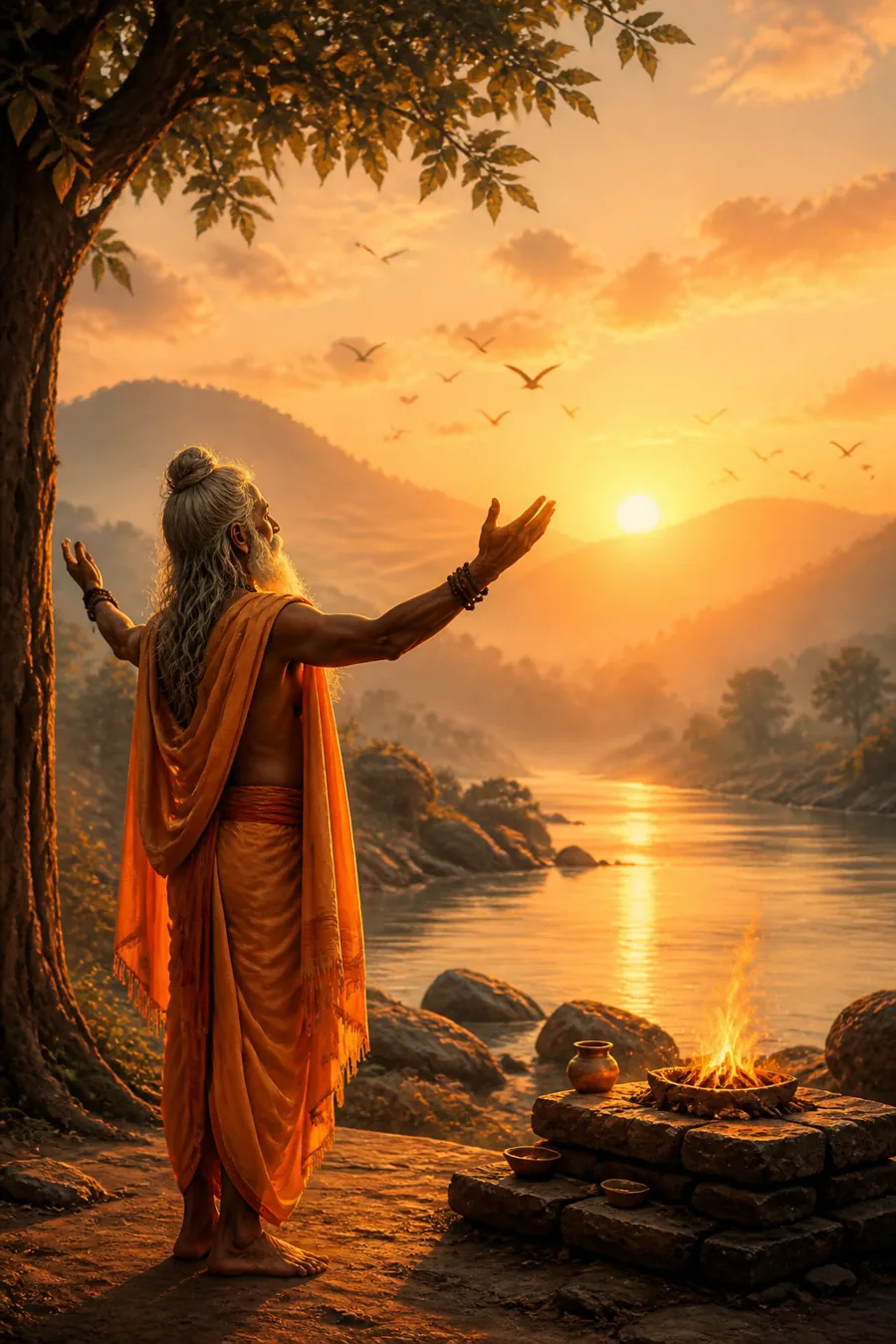
2Many of the hymns say thank you to nature. One is for Ushas, the Dawn, who comes every morning and wakes up the whole world.
3Another is for Agni, the fire. Fire keeps us warm, cooks our food and lights up the night. The very first hymn of the Rigveda is about Agni.
4There are songs for the wind, the rain and the rivers too. The poets looked up at the sky and felt wonder, and they put that wonder into words.
5One very famous verse is called the Gayatri mantra. It asks the sun to light up our minds, so that we can think clearly and well. It is linked to the sage Vishvamitra.
6The Rigveda was made in an old language called Vedic Sanskrit. Next time you see a sunrise, you can say your own little thank you, just like the poets did.
Colour me: The Rigveda: Songs to the Dawn and Fire
The Big Question: How Did Everything Begin?
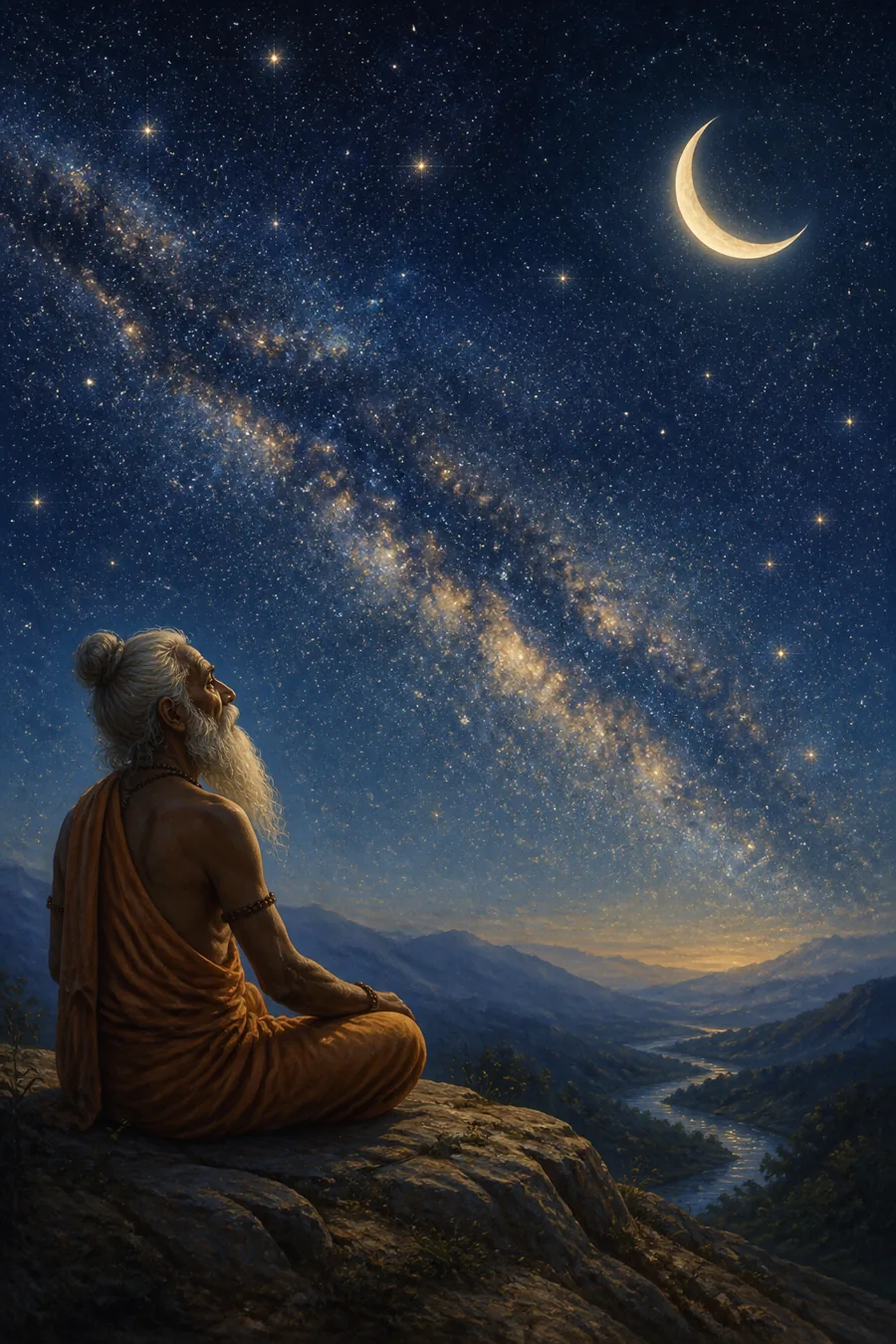
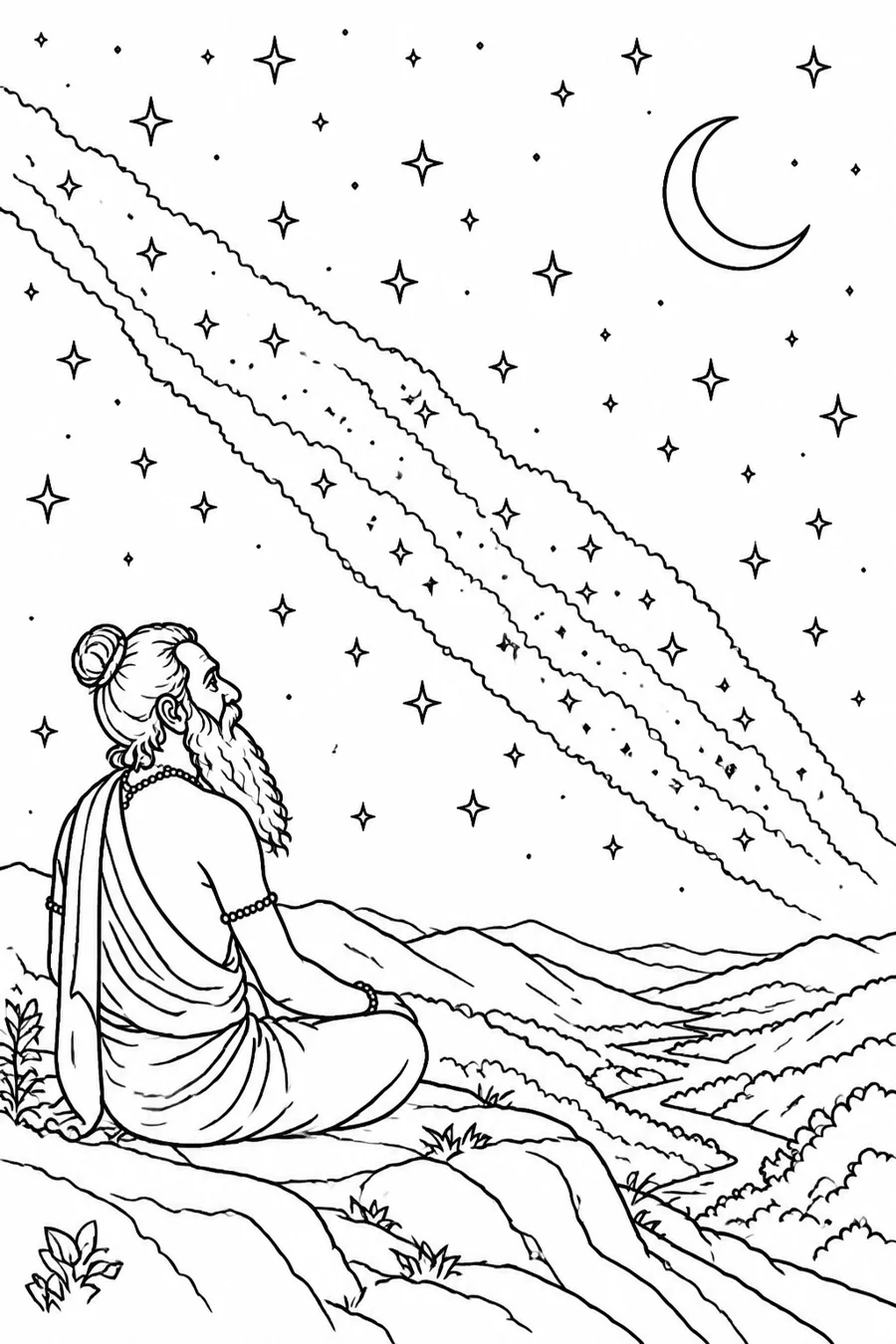
1Inside the Rigveda there is a very special poem called the Nasadiya Sukta. It is only seven verses long. People call it the Song of Creation.
2It asks the biggest question: how did everything begin? Before the earth and sky, before day and night, what was there?
3The poem says there was no day and no night. There was darkness hidden in darkness, and one thing breathing quietly, all by itself, without any wind.
4Then the poet asks: who really knows? Who can say where everything came from?
5The last verse says that the one who watches over everything from the highest heaven may know. Or maybe even he does not know!
6It is a poem that is happy to say, I am not sure. Many people, including the scientist Carl Sagan, have loved it for that.
Colour me: The Big Question: How Did Everything Begin?
The Samaveda: The Veda of Songs
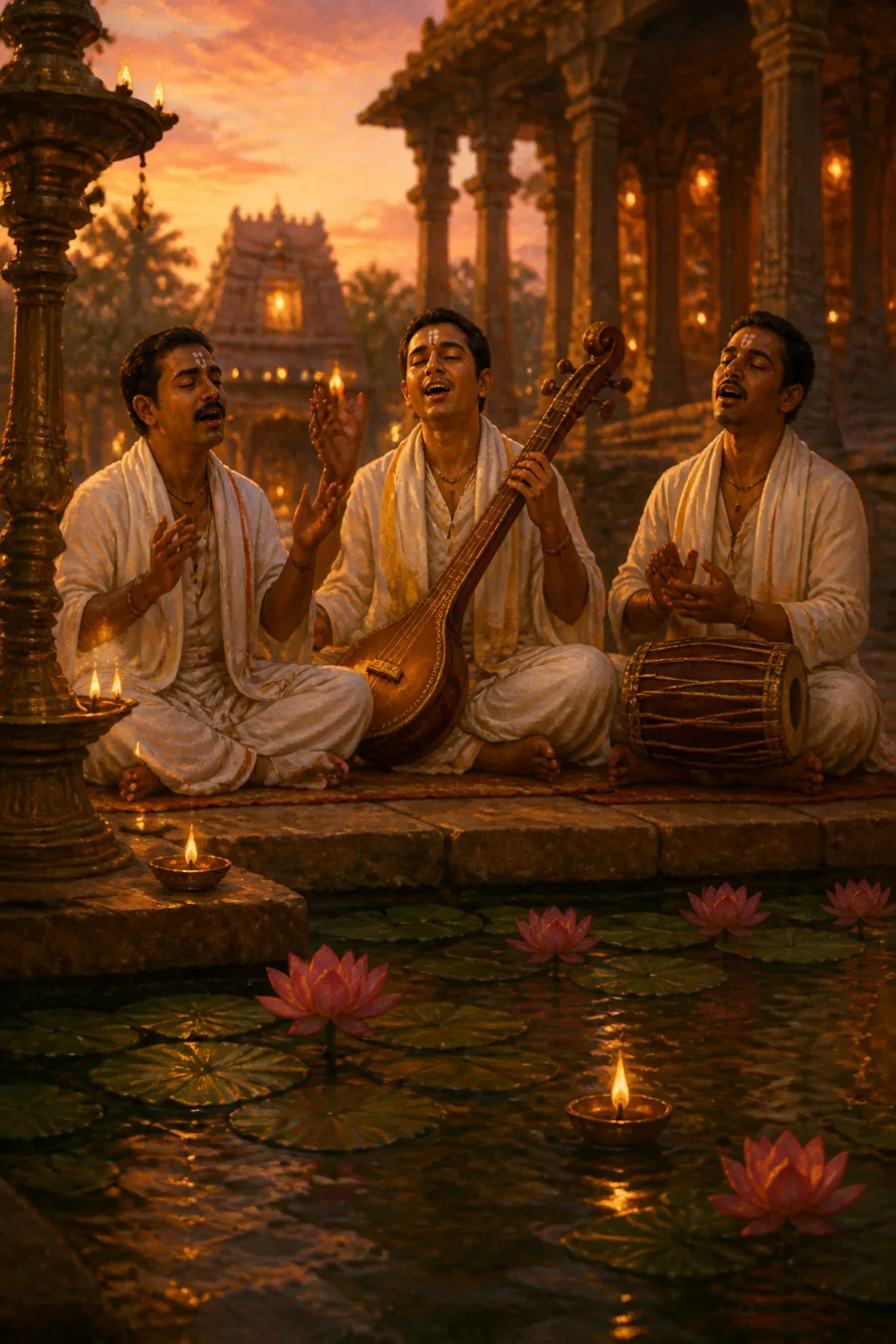
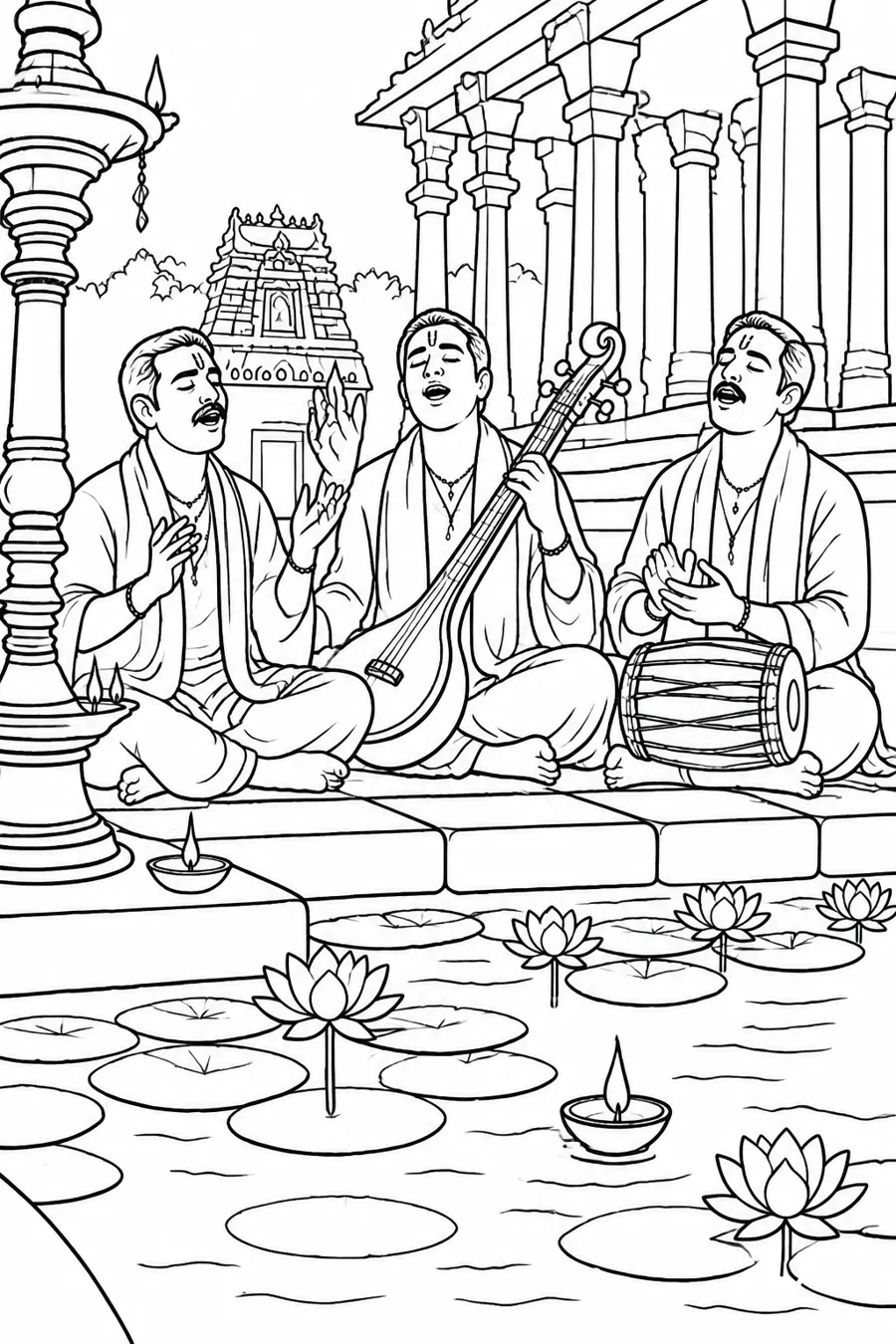
1The Samaveda is the Veda of songs. Its name comes from saman, which means a song or a melody.
2Most of its verses come from the Rigveda. In the Samaveda they come with tunes, like taking a poem and turning it into a song.
3Special singers, called udgatris, sang these songs together in big ceremonies. Some tunes were for singing aloud with others, and some were for quiet thinking.
4The words are stretched and lifted up and down with the tune. Little marks were written above the words, so that singers would not forget the notes.
5Scholars think these are some of the oldest tunes ever written down anywhere in the world!
6Many people say that the music of India, with its ragas and songs, has its roots in this very old singing.
Colour me: The Samaveda: The Veda of Songs
The Veda of Doing and the Veda of Daily Life
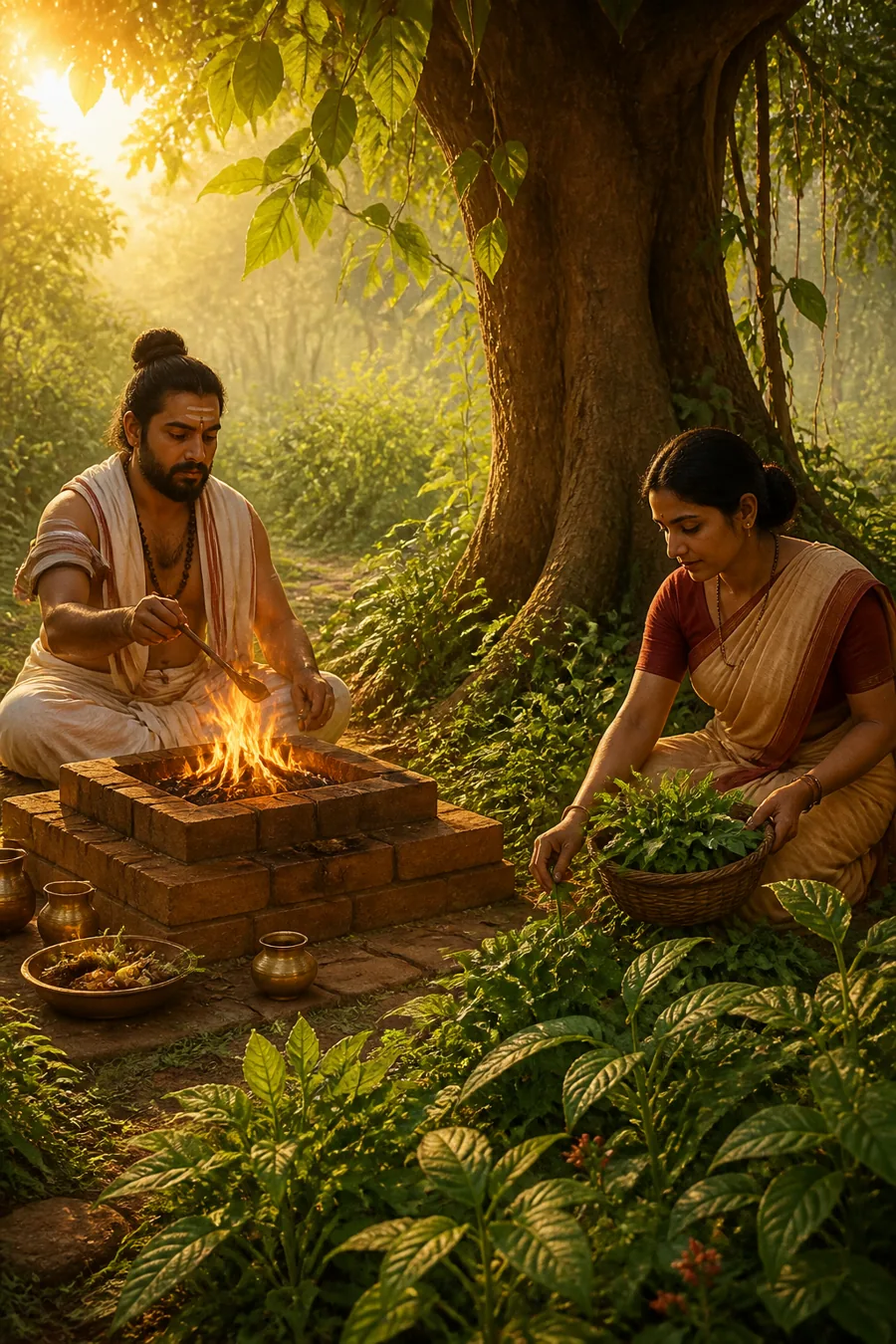
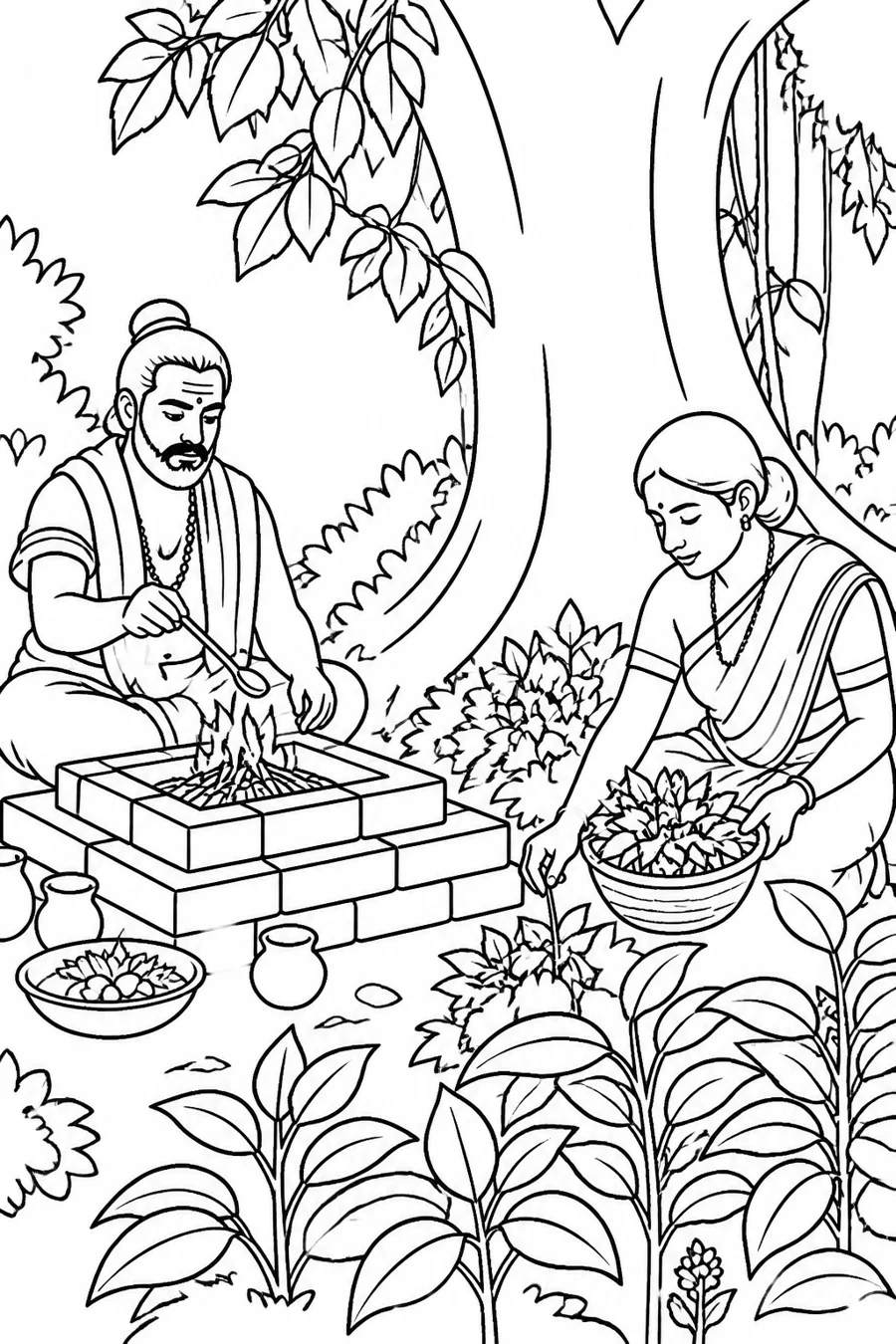
1The Yajurveda is the Veda of doing. It has short sayings and instructions for special ceremonies called yajnas, where offerings were made into a fire.
2In a yajna everything was done with great care: the right words, in the right order, at the right time. It was a bit like following a very careful recipe.
3There are two main kinds of Yajurveda. The Shukla, or bright, one is neatly arranged. The Krishna, or dark, one mixes the sayings with explanations, like a busy cupboard instead of a tidy one.
4The Atharvaveda is the fourth Veda. It is about everyday life: staying healthy, plants that help us get better, a happy home and living peacefully with others.
5It also has a beautiful hymn that praises the Earth as a mother who looks after all her children, the plants, the animals and the people.
6Many people connect the plant knowledge in this Veda with Ayurveda, India's old way of looking after health.
Colour me: The Veda of Doing and the Veda of Daily Life
How the Vedas Were Remembered
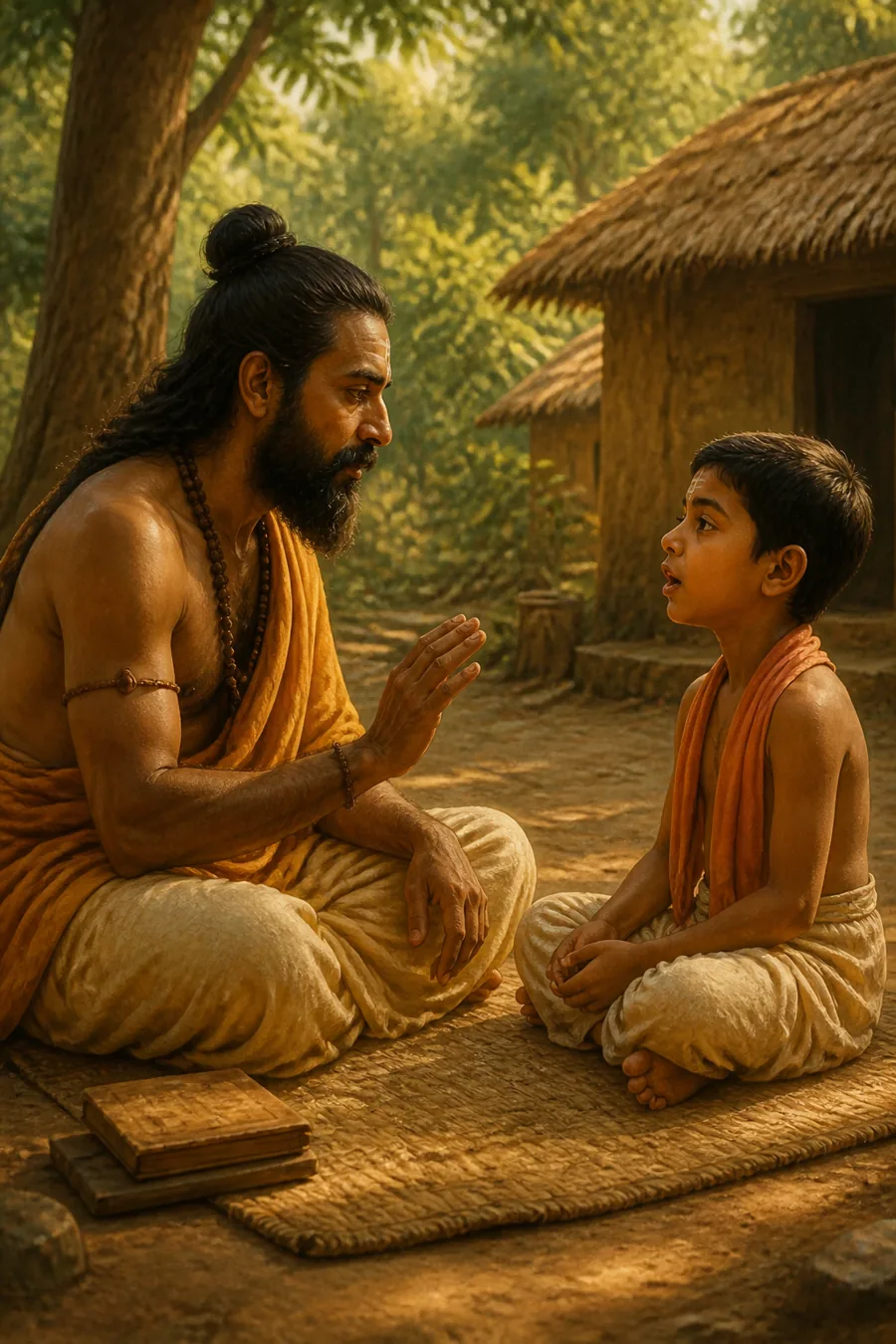
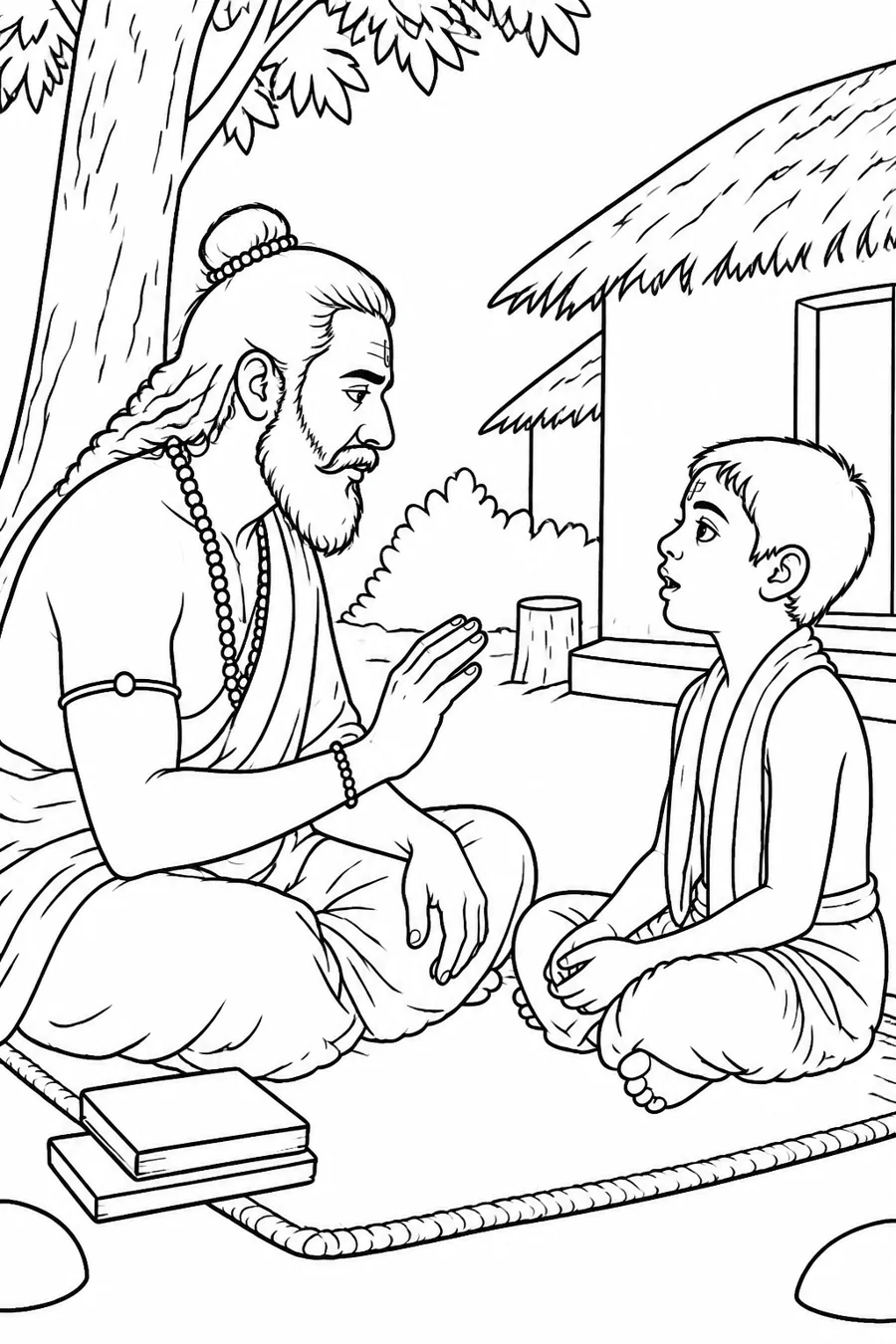
1For hundreds and hundreds of years the Vedas were not read from books. Students learned them by heart from a teacher.
2The student sat close to the teacher, listened carefully and repeated every word, again and again.
3To make sure that no word and no sound changed, they used clever chanting patterns. The words were said forwards and then woven back and forth, a little like braiding a plait.
4Because of this care, Vedic chanting has been passed from teacher to student for a very long time.
5In 2008, UNESCO, a group that looks after treasures of the whole world, put Vedic chanting on its list of the world's oral heritage.
6Today, in some places, students still learn to chant in the same way, with patience and practice.
Colour me: How the Vedas Were Remembered
Gargi and Maitreyi: Wise Women of the Vedas
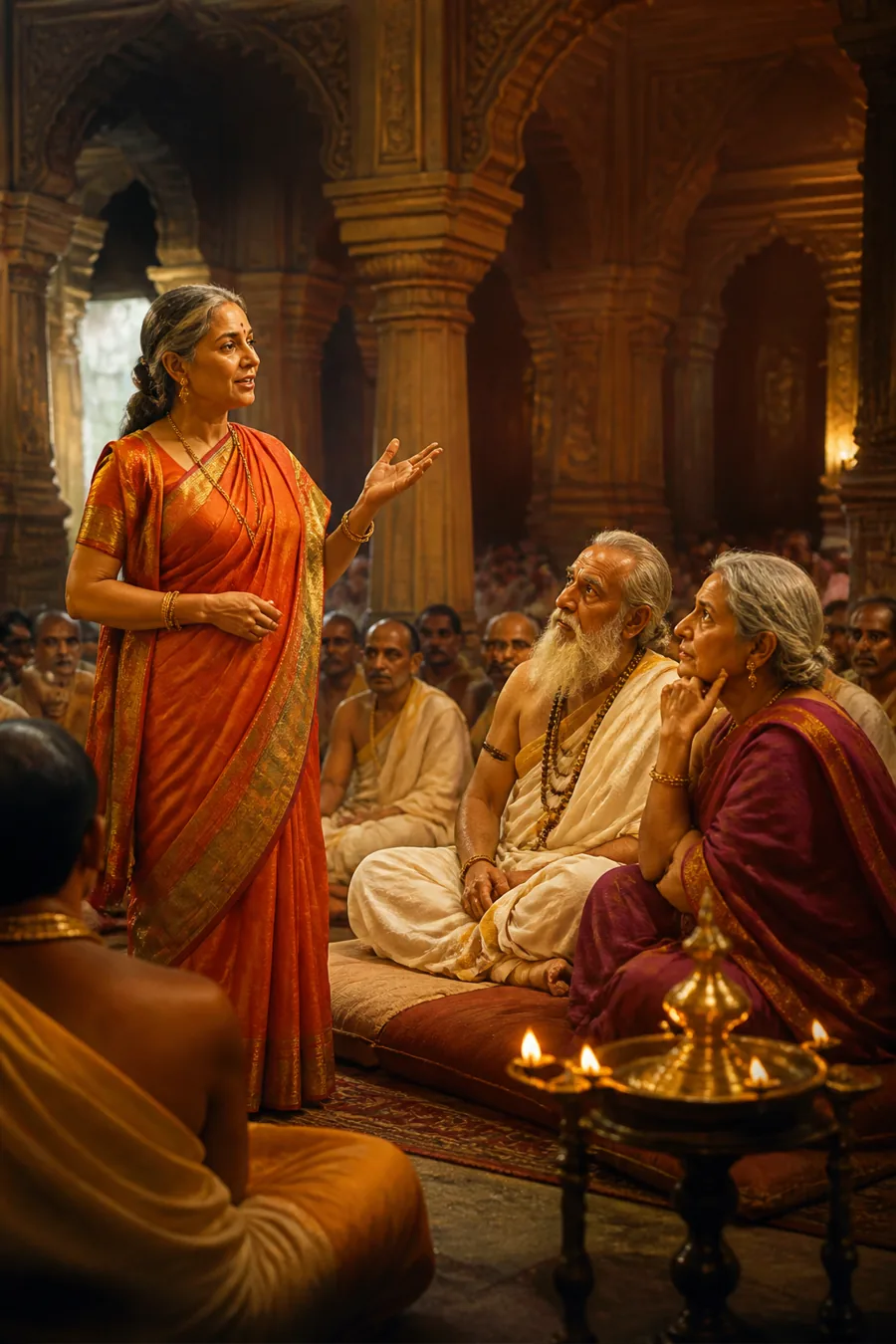
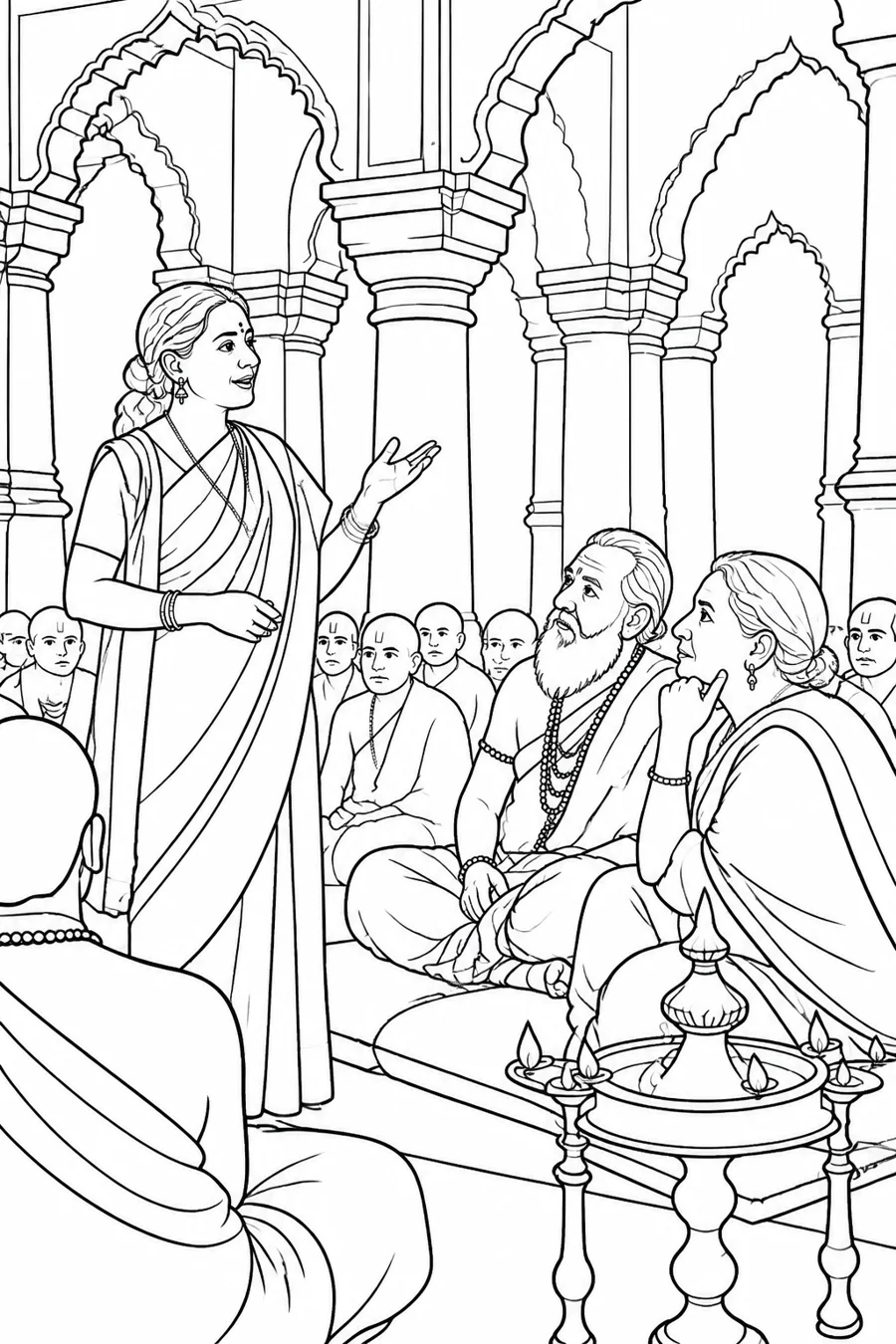
1The Vedas were not only for men. Women learned too, and some were famous for their wisdom.
2Gargi lived long ago. At a big gathering of scholars, hosted by a king named Janaka, she stood up and asked the great teacher Yajnavalkya question after question.
3She was brave and she listened carefully to every answer. People remember her as a woman who was not afraid to ask.
4Maitreyi was the wife of Yajnavalkya. When he decided to leave home and share all he owned, Maitreyi asked, would all this wealth make me happy forever?
5He said, no. Then Maitreyi said, so what would I do with it? Please teach me what you know. And he did.
6Some women are also remembered as poets of Vedic hymns. Girls and women have always been part of this story.
Colour me: Gargi and Maitreyi: Wise Women of the Vedas
The Upanishads: Light and Truth
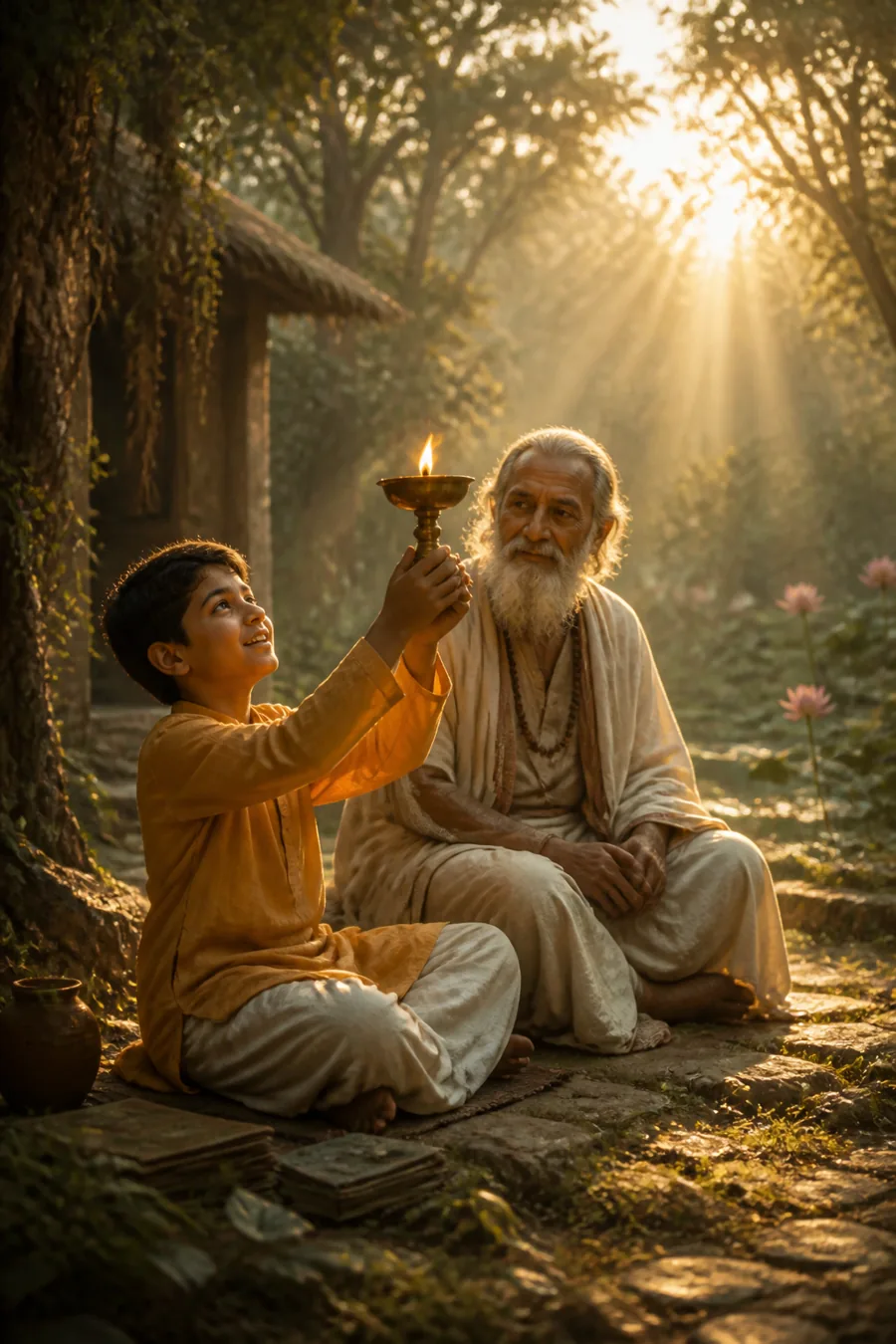
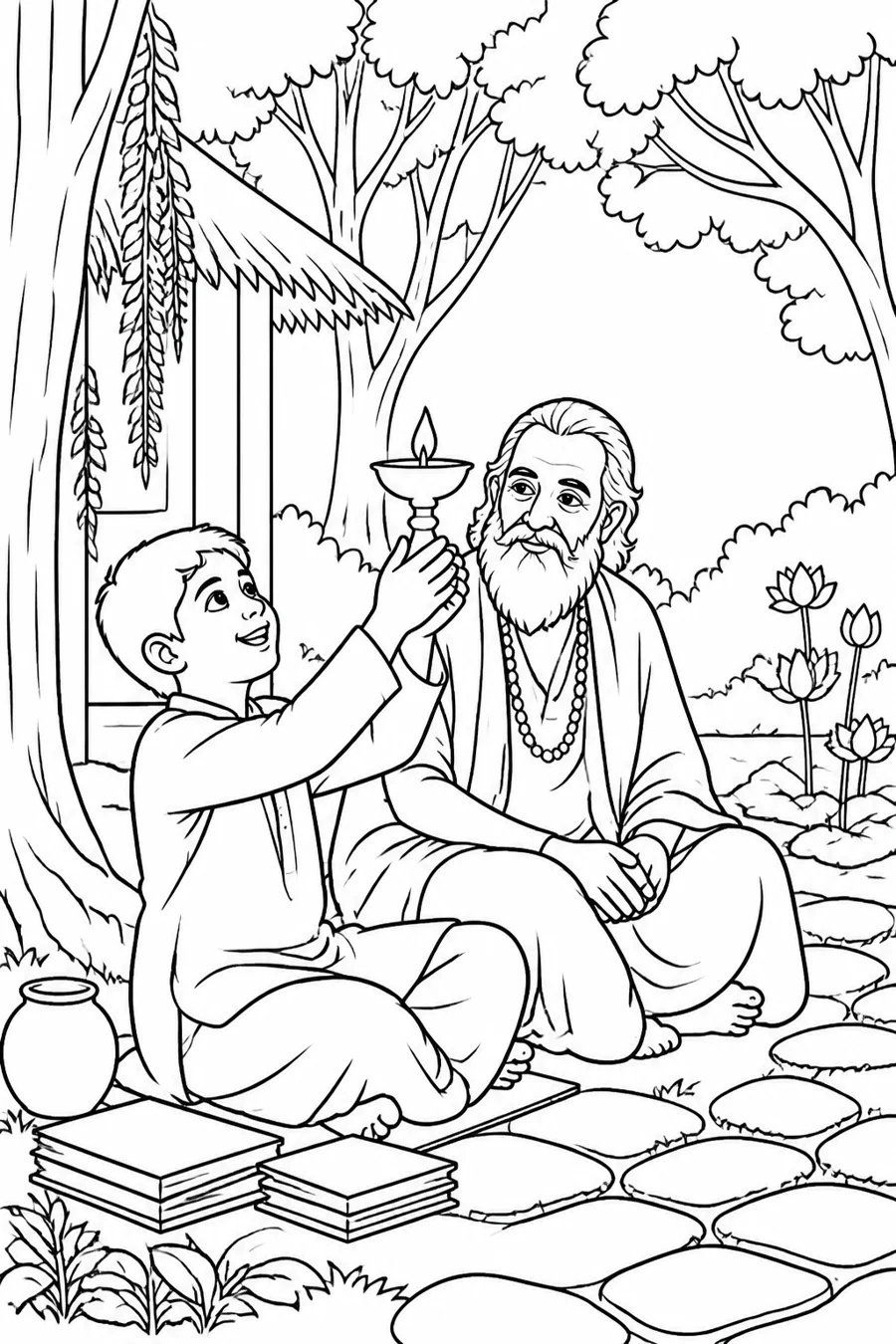
1The word Upanishad means sitting close to a teacher. The Upanishads are talks between teachers and students, and they come near the end of the Vedic books.
2They ask big questions. Who am I? What is true? What is the world made of?
3In one story, a brave boy named Nachiketa goes to meet Yama, who knows the secrets of life and death. Nachiketa waits patiently at his door, so Yama offers him three wishes.
4Nachiketa does not ask for toys or gold. He asks to understand the biggest truths. Yama is very impressed by a child who wants to learn.
5A famous prayer from the Upanishads says: lead me from untruth to truth, from darkness to light.
6India's national motto, Satyameva Jayate, which means truth alone wins, comes from an Upanishad too.
Colour me: The Upanishads: Light and Truth
The End
More stories to read, draw and colour at rangooo.com