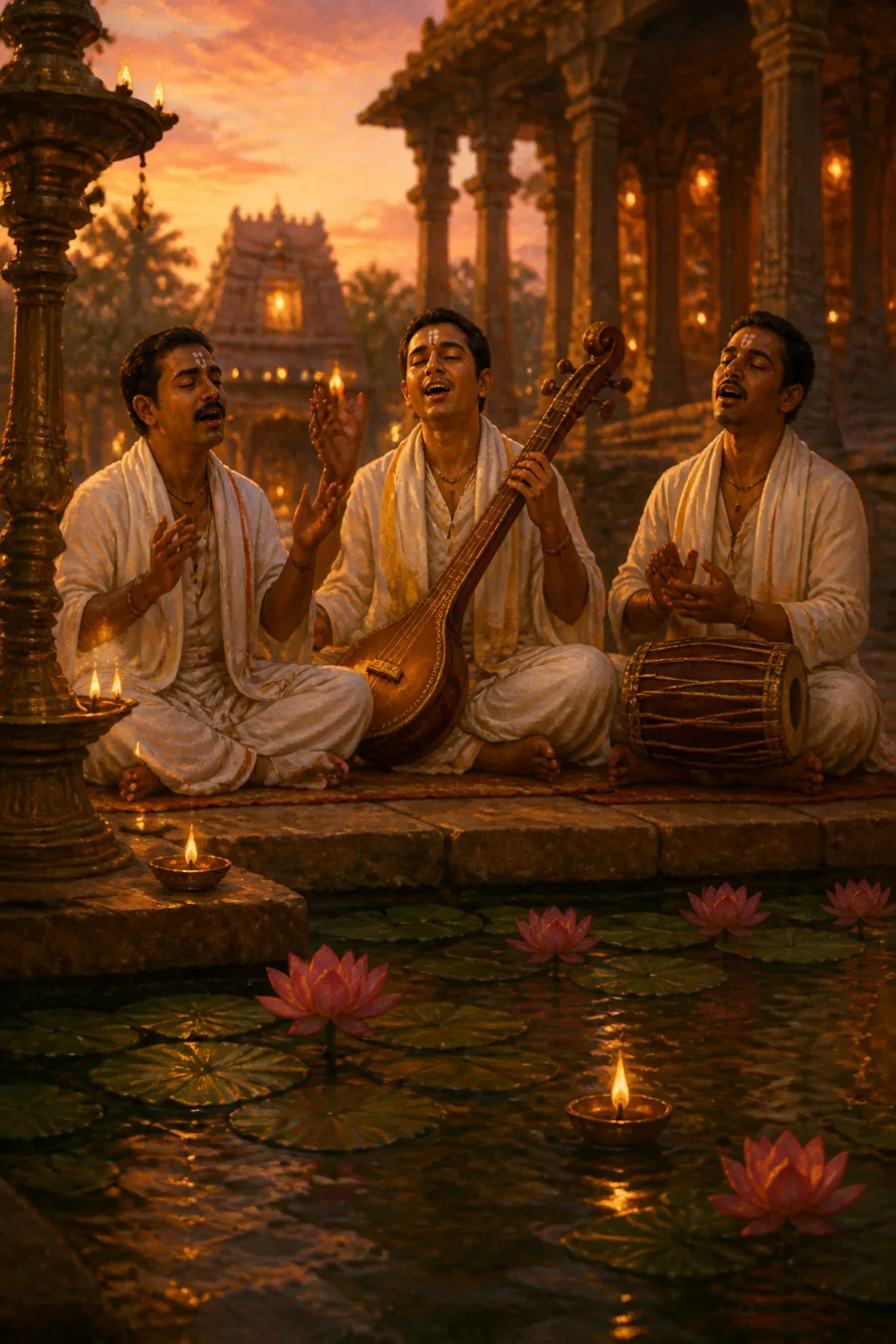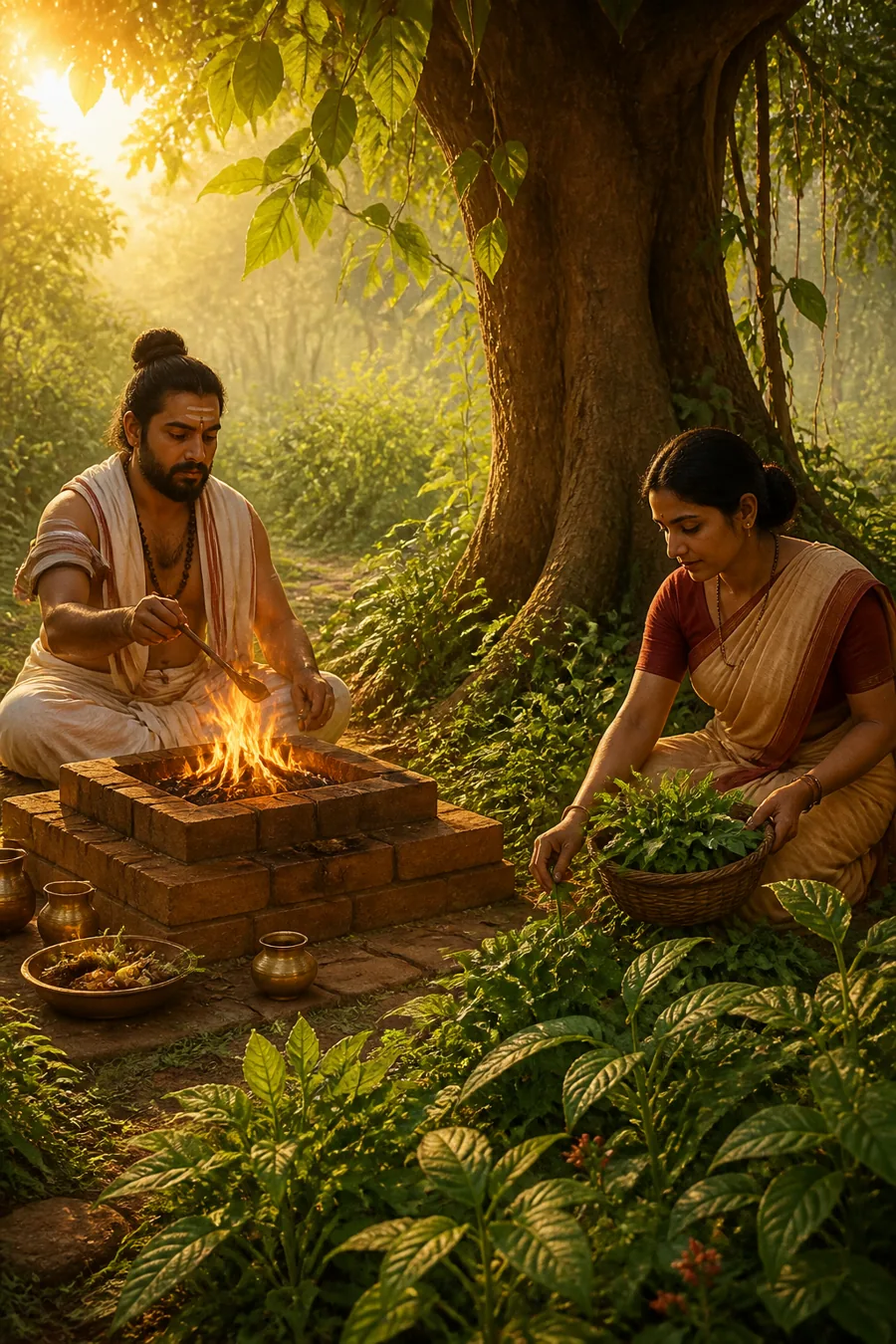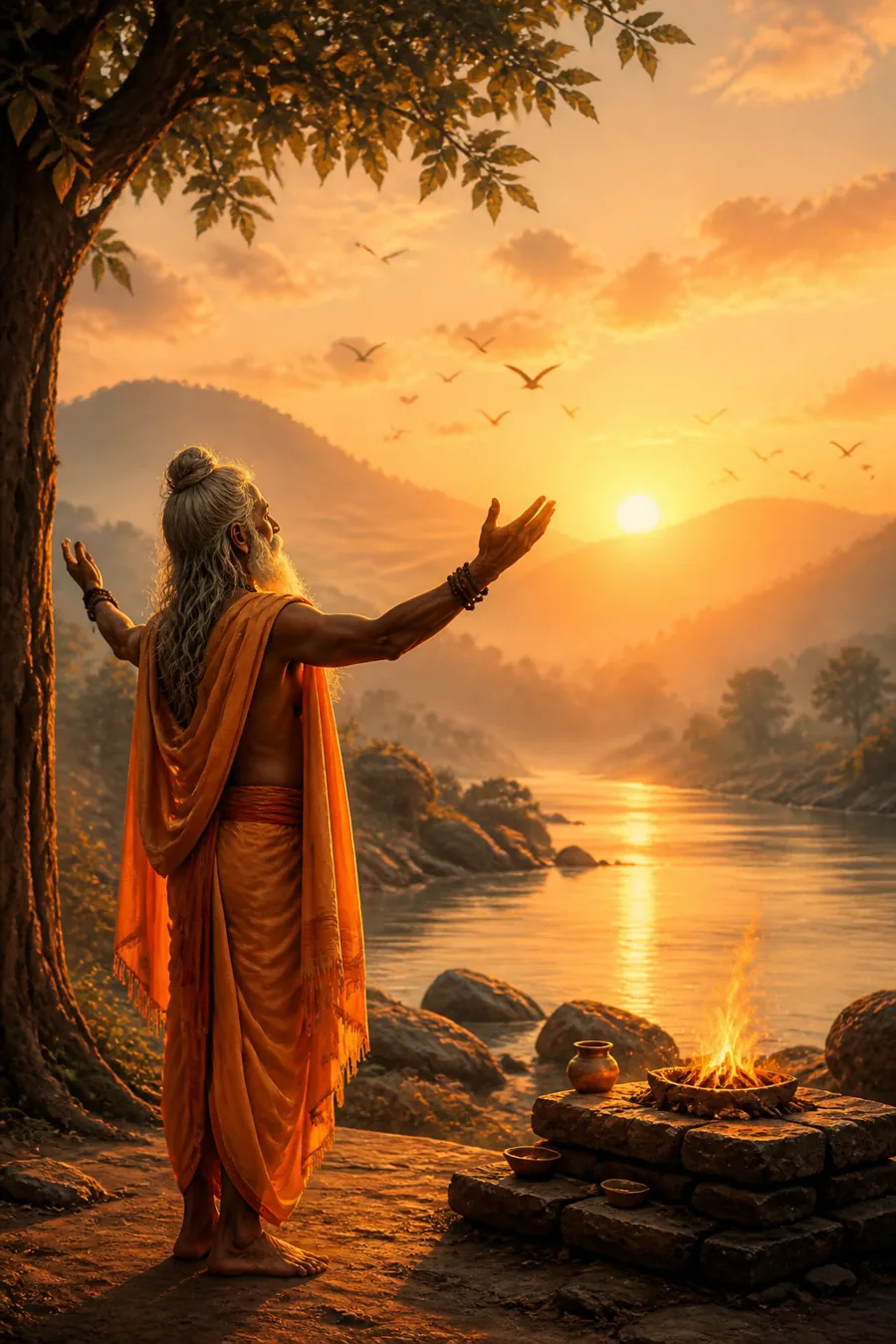
The Rigveda is the oldest of the four Vedas. It is a collection of more than a thousand songs, called hymns, in ten big parts.
Many of the hymns say thank you to nature. One is for Ushas, the Dawn, who comes every morning and wakes up the whole world.
Another is for Agni, the fire. Fire keeps us warm, cooks our food and lights up the night. The very first hymn of the Rigveda is about Agni.
There are songs for the wind, the rain and the rivers too. The poets looked up at the sky and felt wonder, and they put that wonder into words.
One very famous verse is called the Gayatri mantra. It asks the sun to light up our minds, so that we can think clearly and well. It is linked to the sage Vishvamitra.
The Rigveda was made in an old language called Vedic Sanskrit. Next time you see a sunrise, you can say your own little thank you, just like the poets did.

The Rigveda: Songs to the Dawn and Fire
The oldest Veda is full of thank-you songs for the sun, the fire and the morning.
Learn more
Facts, a quiz and words to knowDid you know?
- The Rigveda has 1,028 hymns, called suktas, in ten books called mandalas. Together they hold about 10,600 verses.
- Books 2 to 7 are called the "family books". Each is remembered as the work of one family of rishis, such as the families of Vishvamitra, Vasishtha and Atri.
- Indra, the god of rain and thunder, is praised in about 250 hymns, more than any other god. Agni, the fire, comes next with about 200.
- The very first line of the Rigveda begins with the word Agni: "Agnim ile purohitam". It means "I praise Agni, who stands in front".
- One hymn (7.103) is about frogs! It compares frogs croaking together after the first rain to students chanting their lessons.
- Another hymn (10.75) praises rivers by name, among them the Sindhu, the Ganga, the Yamuna and the Saraswati.
- Women seers, called rishikas, are remembered for Rigveda hymns, among them Ghosha, Lopamudra, Apala and Vishvavara.
- The Gayatri mantra is verse 62 of the third book (3.62.10), traditionally linked to the sage Vishvamitra.
Quick quiz
1How many mandalas (books) does the Rigveda have?
- Four
- Seven
- Ten
Show the answer
C. Ten. Ten mandalas.
2The Rigveda begins with a hymn to which god?
- Agni, the fire
- Indra, the rain
- Ushas, the dawn
Show the answer
A. Agni, the fire. Hymn 1.1 praises Agni.
3Which animals are in a famous Rigveda hymn about the rains?
- Frogs
- Peacocks
- Crows
Show the answer
A. Frogs. Hymn 7.103 is about frogs.
4What does the Gayatri mantra ask the sun to do?
- Bring us gold
- Light up our minds
- Make it rain
Show the answer
B. Light up our minds. It asks for clear thinking.
5What is a hymn of the Rigveda called?
- Sukta
- Raga
- Katha
Show the answer
A. Sukta. Sukta means "well said".
Words to know
- Sukta
- A hymn; the word means "well said"
- Mandala
- A circle, and also a "book" of the Rigveda
- Agni
- Fire
- Ushas
- The dawn
- Indra
- King of the gods; thunder and rain
- Rishika
- A woman seer of the Vedas
Think and do
Talk about it. The poets thanked fire, dawn and rivers. What part of nature would you write a thank-you song for?
Try it. Write four lines of thanks to the sun, the rain or a tree. Read them aloud outside at sunrise or sunset.
Remember: Gratitude for the world around us.
Up next
Written for children from well-known scholarly and public sources, including UNESCO and the texts themselves. Nobody knows exactly when the Vedas were composed, so we say 'more than 3,000 years ago'. Families follow the Vedas in different ways; this series simply tells what the books are and what they say.