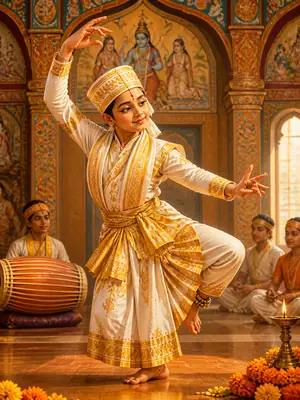
Sattriya comes from Assam, in the north-east of India.
It was created by the saint and poet Srimanta Sankardeva, who lived in the 15th and 16th centuries.
For hundreds of years it was danced mostly by monks, called bhokots, inside monasteries called sattras.
Drums called khol and cymbals play the music. The stories are about Krishna.
The costumes are made of Assam’s own silk, called pat silk.
In 2000, Sattriya was recognised as a classical dance. It was the eighth on the list, and the newest of them all.

Sattriya: The Dance of the Monasteries
A dance that monks kept alive for five hundred years.
Learn more
Facts, a quiz and words to knowDid you know?
- Sattriya was recognised as a classical dance in 2000.
- It was created by Srimanta Sankardeva, who lived in the 15th and 16th centuries.
- Monks called bhokots danced it inside monasteries called sattras.
- The khol is a drum used in the music.
Quick quiz
1Who created Sattriya?
- Srimanta Sankardeva
- Vallathol
- Birju Maharaj
Show the answer
A. Srimanta Sankardeva. He was a saint and poet of Assam.
2Who danced it for hundreds of years?
- Monks
- Soldiers
- Farmers
Show the answer
A. Monks. Monks in the sattras kept it alive.
3Which state does Sattriya come from?
- Assam
- Kerala
- Rajasthan
Show the answer
A. Assam. Sattriya is from Assam.
Words to know
- Sattra
- A monastery in Assam
- Bhokot
- A monk who dances
- Khol
- A drum used in Sattriya
- Pat silk
- A silk made in Assam
Think and do
Talk about it. Which traditions does your family keep?
Try it. Ask a grandparent about a song, dance or festival they remember, and learn one step or line of it.
Remember: Caring for old traditions.
Up next
Written for children from well-known public sources, including the Sangeet Natak Akademi and UNESCO. Dates are approximate, and every dance has several schools and styles; this series tells the main ideas.