
Classical Dances of India for Kids
Eight short stories on the eight classical dances
 Read it, draw it, colour it · Rangoo · rangooo.com
Bharatanatyam: Hands, Eyes and Feet
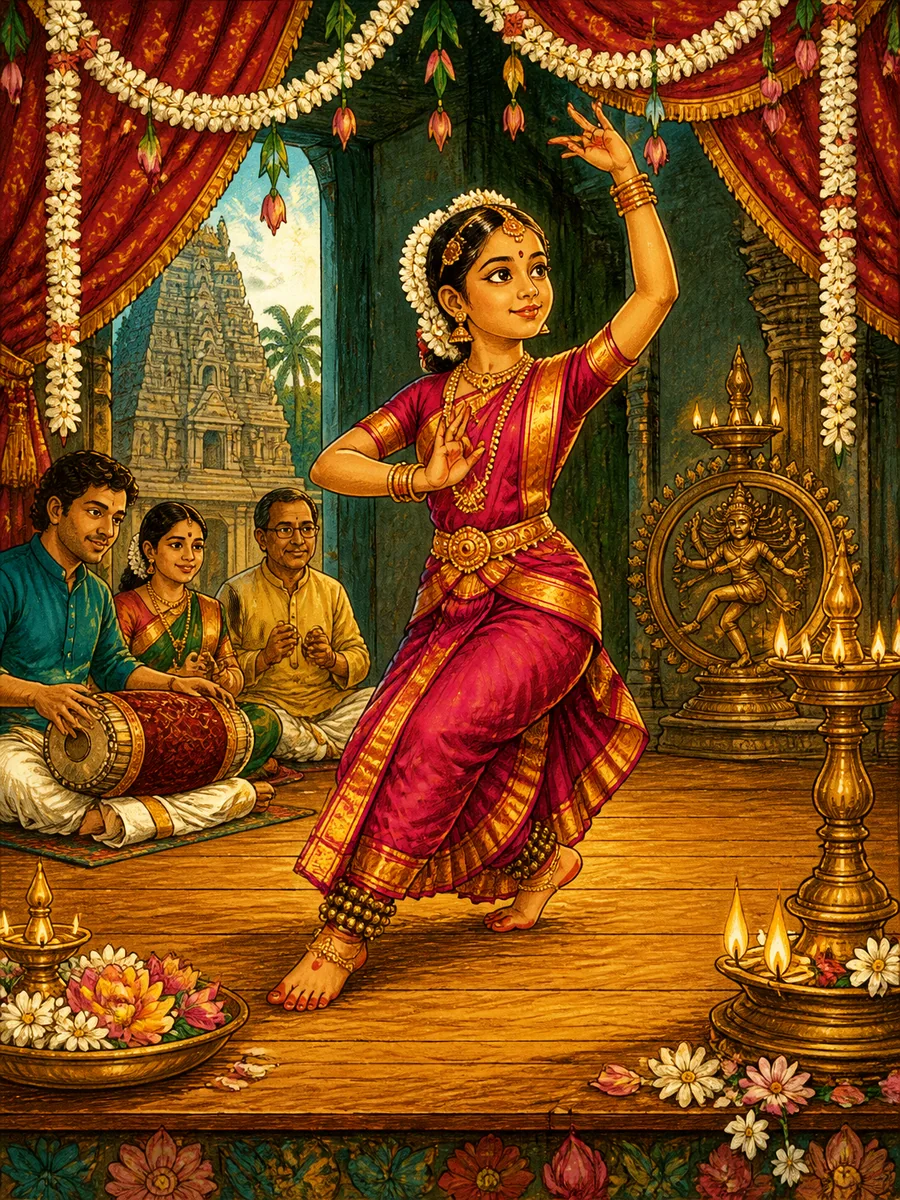
1Bharatanatyam is a dance from Tamil Nadu, in the south of India. It began in the temples, where dancers offered their art to the gods.
2In the 1930s, artists such as Rukmini Devi Arundale helped bring the dance to the concert stage, so that everyone could enjoy it.
3The dancer sits halfway down, with her knees bent and turned out. This pose is called araimandi. It looks easy, but it takes lots of practice!
4Her feet strike the floor in fast, clear beats, while her hands make shapes called mudras. One hand shape can become a lotus, a deer or a bow.
5A teacher called the nattuvanar keeps the time with small cymbals and calls out rhythm words. A singer, a violin and a drum called the mridangam play the music.
6Dancers also tell stories with their faces and eyes. Try telling a tiny story with only your hands and your eyes.
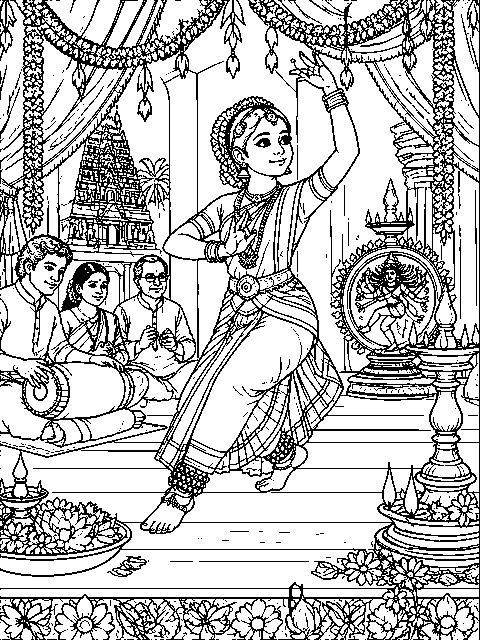
Colour me: Bharatanatyam: Hands, Eyes and Feet
Kathak: The Dance of the Storytellers
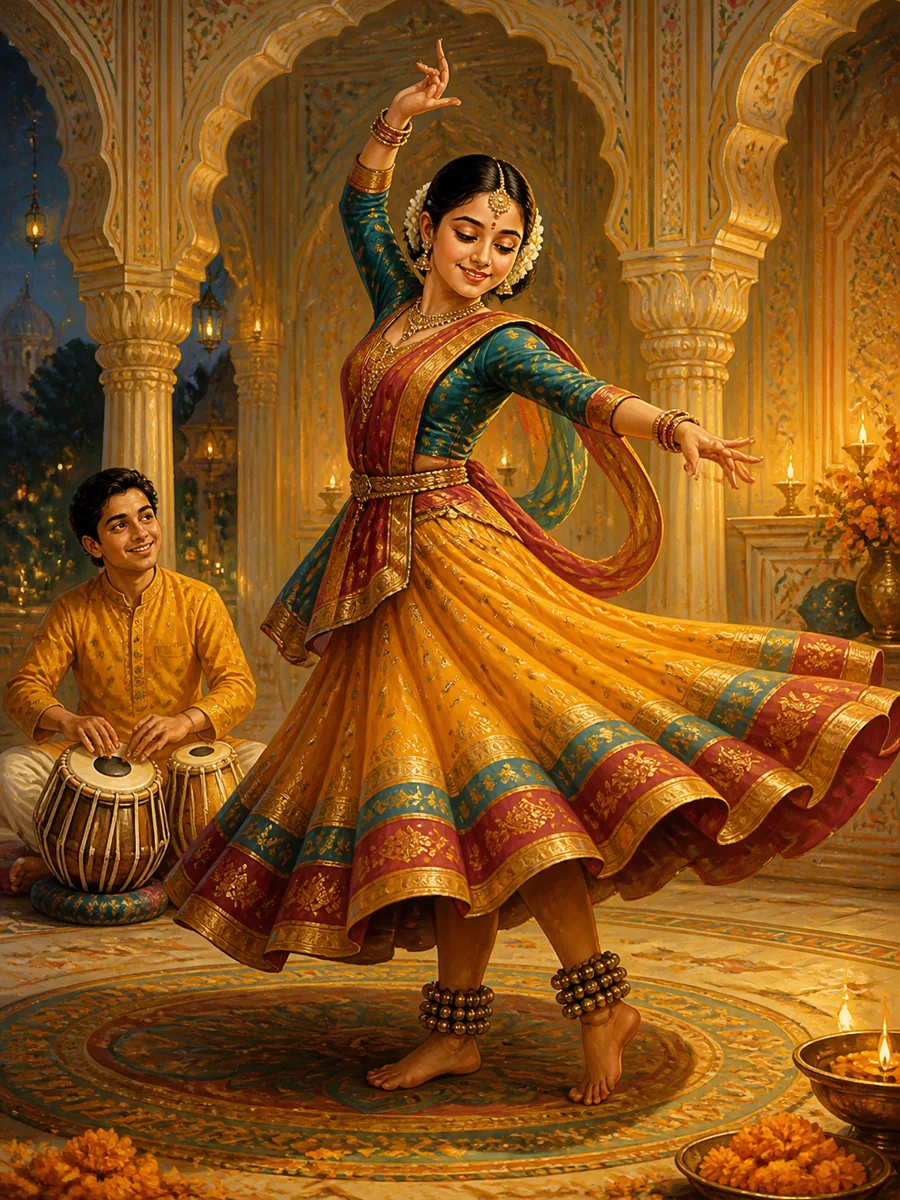
1Kathak comes from North India. Its name comes from katha, the word for a story.
2Long ago, travelling storytellers called kathakars told tales of Krishna in temples and villages, using songs, gestures and rhythm.
3Later, the dance was also performed in royal courts, where it became faster and more sparkling.
4Dancers spin round and round in fast turns called chakkars, and then stop perfectly still. Rows of small bells, called ghungroos, ring on their ankles.
5The feet talk with the tabla drum. The dancer and the drummer play a game of copying each other, faster and faster.
6Kathak has different schools, called gharanas. Pandit Birju Maharaj of the Lucknow gharana was one of its most loved teachers.
Kathakali: Painted Faces and Giant Skirts
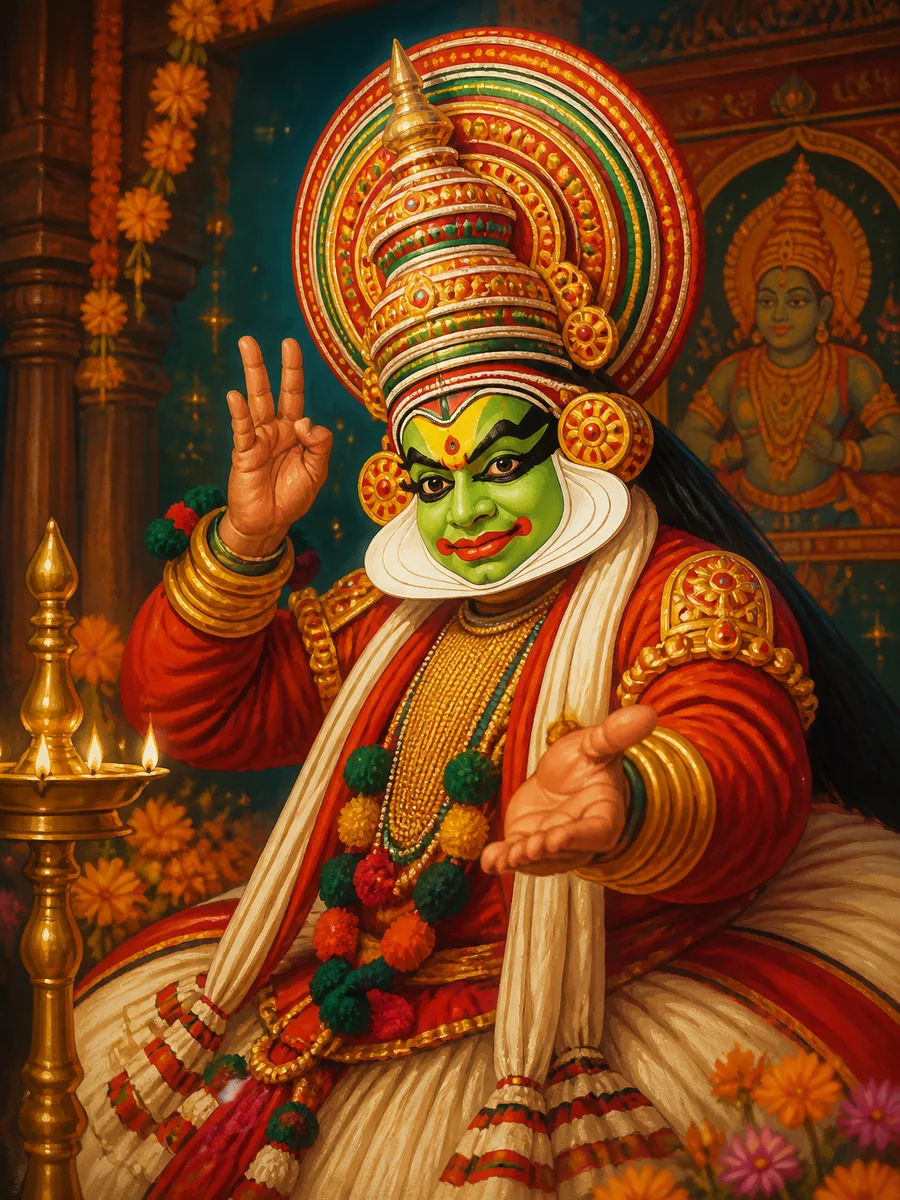
1Kathakali comes from Kerala. It is a dance-drama, like a play in which the actors dance instead of speaking.
2The stories come from the Ramayana and the Mahabharata. Singers sing the words, and the actors show every feeling with their faces, hands and eyes.
3The make-up is a colour code! A green face means a noble hero. A red-streaked face means a proud, fierce villain. A soft yellow-orange face means a gentle woman or a sage.
4Putting on the make-up can take hours. The actors also wear tall crowns and huge, wide skirts.
5Loud drums called the chenda and the maddalam play. Traditionally, a Kathakali play lasts through the night.
6Actors train for years to move their eyes and eyebrows in many ways. Look in a mirror and see how much you can say with only your eyes.
Kuchipudi: Dancing on a Brass Plate
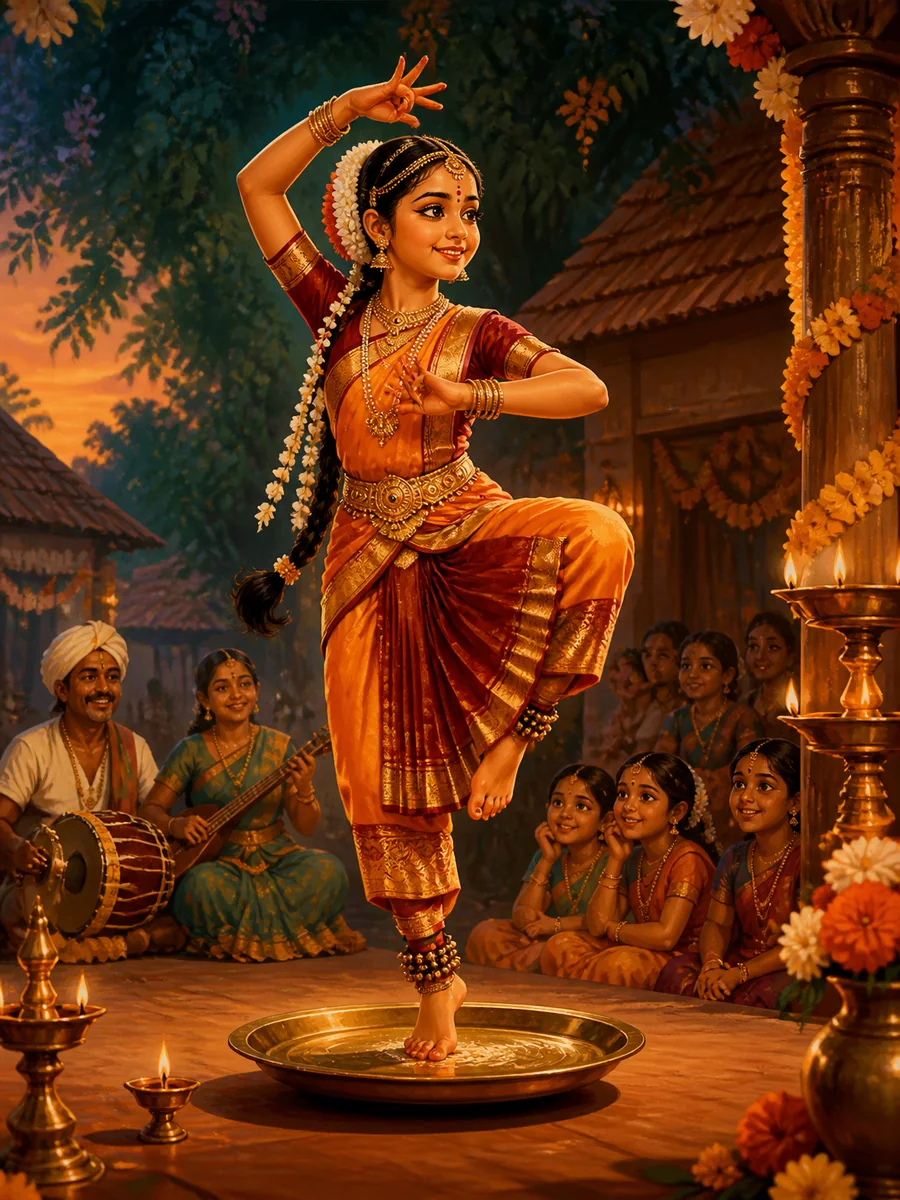
1Kuchipudi is named after a village called Kuchipudi in Andhra Pradesh. Families there performed dance-dramas for many years.
2A saint-poet called Siddhendra Yogi is remembered for shaping the dance, around the 1600s.
3The dance is quick, bouncy and full of drama. Dancers sometimes speak or sing their lines as they act.
4A famous piece is the Tarangam. The dancer stands on the rim of a brass plate and moves the plate across the floor in time with the music.
5Some dancers even balance a pot of water on their heads while they do it, without spilling a drop!
6Kuchipudi shows that dance can be a game of balance and fun, as well as beauty.
Odissi: Temple Carvings Come Alive
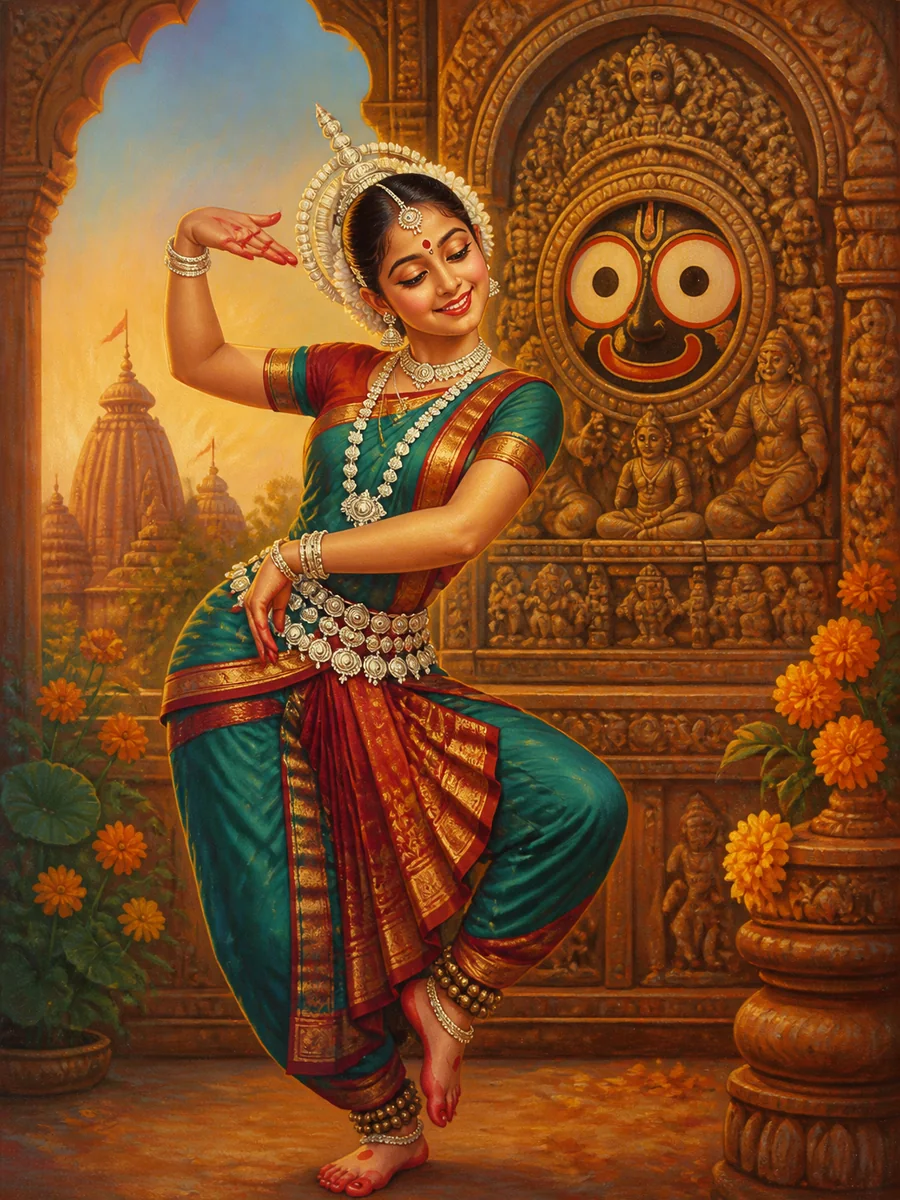
1Odissi comes from Odisha, on the east coast of India. It grew in the temples there.
2Temple dancers called maharis danced for the god Jagannath. Boys called gotipuas also danced in the temples.
3On the walls of the Sun Temple at Konark there are stone carvings of dancers. Odissi dancers still use poses like those.
4Odissi’s special pose is the tribhangi. The body bends in three places: at the neck, the waist and the knee. It looks like a gentle S.
5Another pose is the chauka, a square stance, as if you were holding a big box between your arms and legs.
6Many Odissi pieces are set to the Gita Govinda, a poem from the 12th century about Radha and Krishna. Dancers wear silver jewellery and a headpiece shaped like a temple.
Manipuri: Soft Steps and Flying Drummers
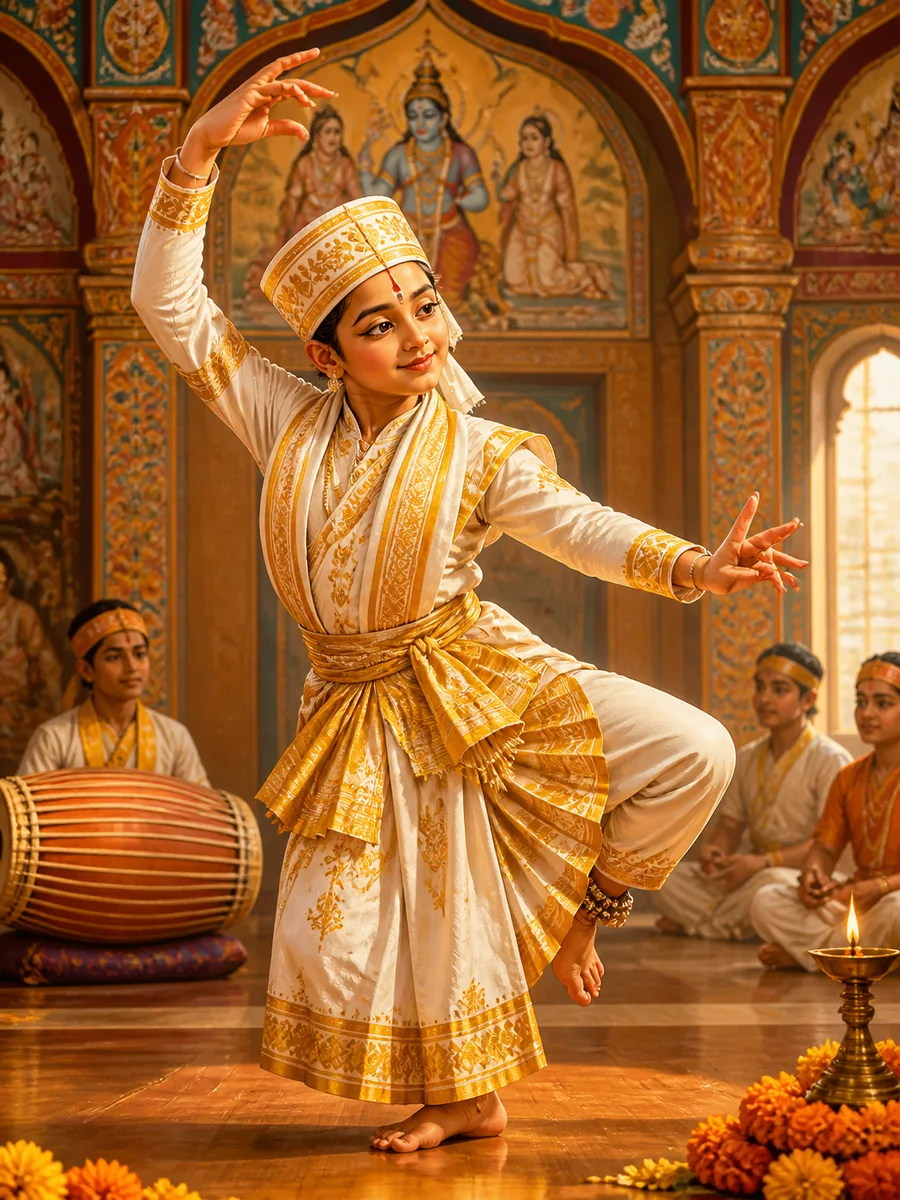
1Manipuri dance comes from Manipur, a green, hilly state in the north-east of India.
2It is soft and flowing. The feet never stamp. Every movement is round and gentle, like waves.
3Its best-known form is the Ras Lila, which shows Krishna dancing with Radha and her friends, the gopis.
4Dancers wear a stiff, barrel-shaped skirt called a potloi, and a light veil.
5In Pung Cholom, drummers play the pung drum while they dance, spin and even leap into the air!
6Manipuri is danced as an offering, a kind of prayer. Quiet music and quiet moves can be very powerful.
Mohiniyattam: Swaying Like the Palm Trees
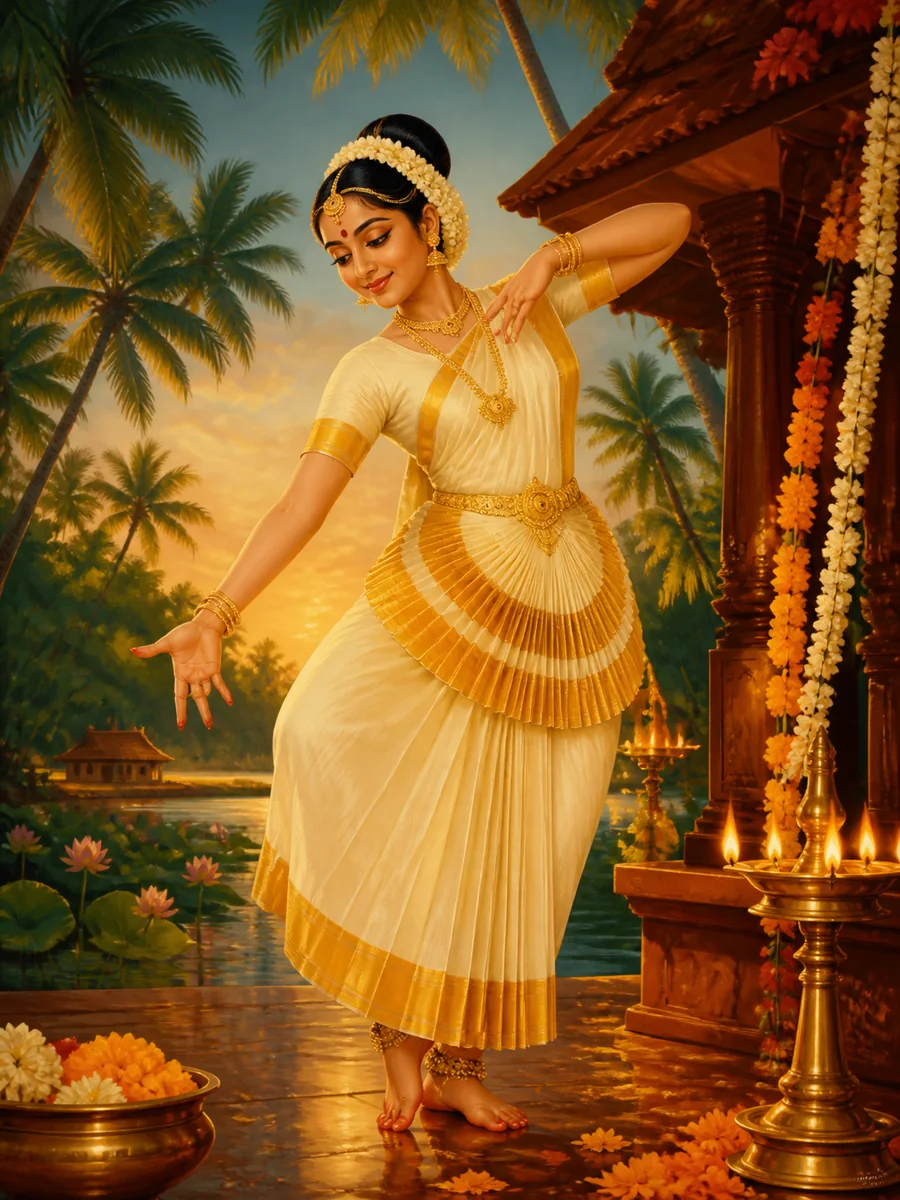
1Mohiniyattam comes from Kerala. Its name means the dance of Mohini, the enchantress.
2In an old story, the god Vishnu took the form of Mohini, a beautiful woman, to help the world.
3The dance sways softly from side to side, like palm trees in the wind or waves on Kerala’s backwaters.
4Dancers wear a white sari with a gold border, called a kasavu. Their hair is in a bun on one side, with jasmine flowers.
5The poet Vallathol started the Kerala Kalamandalam, an arts school, in 1930. It helped Mohiniyattam to bloom again.
6The movements are slow and smooth, and the face is calm. Try swaying slowly from side to side and listen to your breathing.
Sattriya: The Dance of the Monasteries
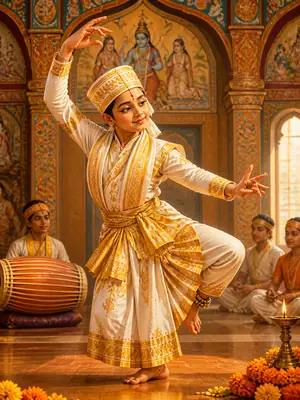
1Sattriya comes from Assam, in the north-east of India.
2It was created by the saint and poet Srimanta Sankardeva, who lived in the 15th and 16th centuries.
3For hundreds of years it was danced mostly by monks, called bhokots, inside monasteries called sattras.
4Drums called khol and cymbals play the music. The stories are about Krishna.
5The costumes are made of Assam’s own silk, called pat silk.
6In 2000, Sattriya was recognised as a classical dance. It was the eighth on the list, and the newest of them all.
The End
More stories to read, draw and colour at rangooo.com