Kathak comes from North India. Its name comes from katha, the word for a story.
Long ago, travelling storytellers called kathakars told tales of Krishna in temples and villages, using songs, gestures and rhythm.
Later, the dance was also performed in royal courts, where it became faster and more sparkling.
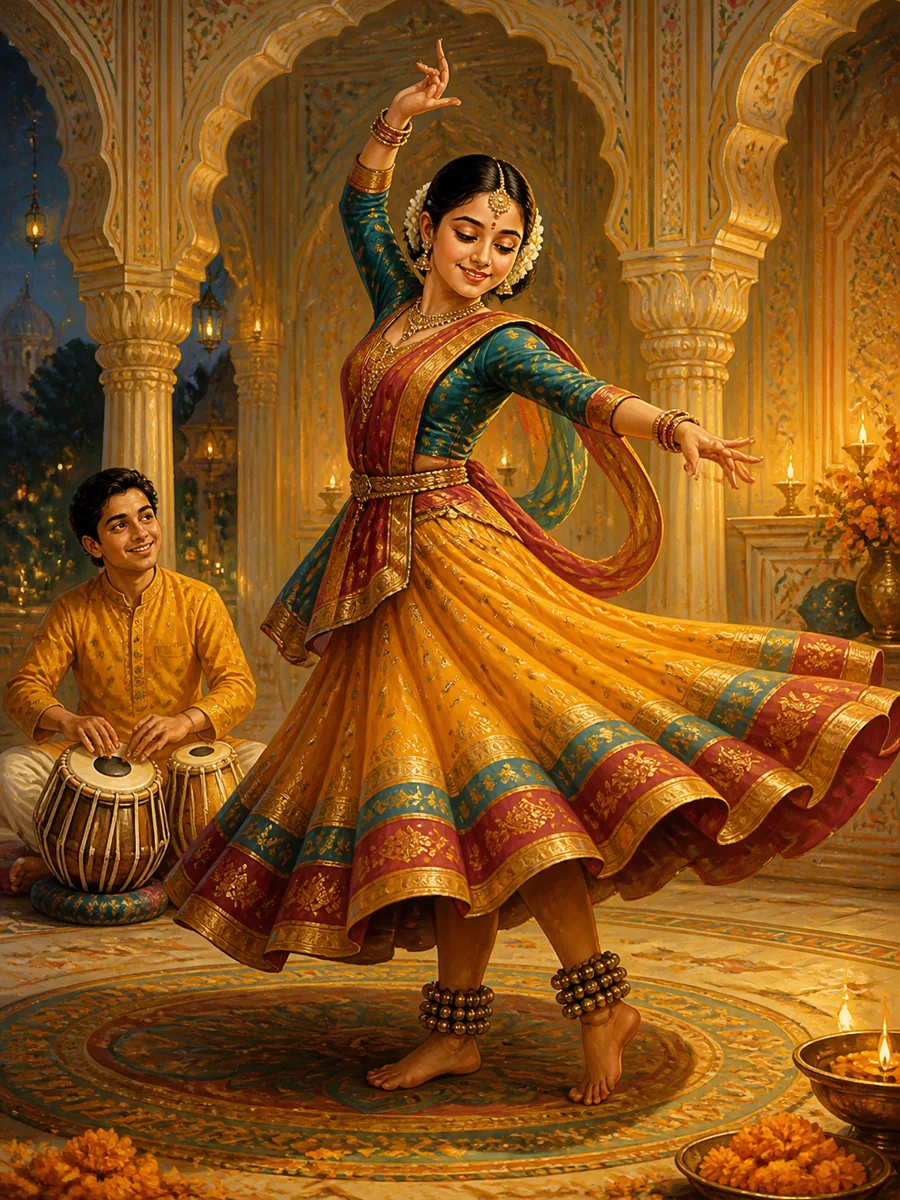
Dancers spin round and round in fast turns called chakkars, and then stop perfectly still. Rows of small bells, called ghungroos, ring on their ankles.
The feet talk with the tabla drum. The dancer and the drummer play a game of copying each other, faster and faster.
Kathak has different schools, called gharanas. Pandit Birju Maharaj of the Lucknow gharana was one of its most loved teachers.

Kathak: The Dance of the Storytellers
Spinning, stomping and ringing bells: the dance that grew from travelling storytellers.
Learn more
Facts, a quiz and words to knowDid you know?
- The name Kathak comes from katha, the Sanskrit word for story.
- A chakkar is a spin. Kathak dancers can do dozens of them in a row and stop perfectly still.
- The three best-known Kathak schools, or gharanas, are Jaipur, Lucknow and Banaras.
- A Kathak dancer and a tabla player often play a game of copying each other’s rhythms.
Quick quiz
1What is a fast spin called?
- Chakkar
- Araimandi
- Potloi
Show the answer
A. Chakkar. A chakkar is a quick spin.
2What are the ankle bells called?
- Ghungroo
- Pung
- Dhol
Show the answer
A. Ghungroo. Ghungroos are rows of small bells tied round the ankles.
3Which drum plays with Kathak?
- Tabla
- Chenda
- Khol
Show the answer
A. Tabla. The tabla and the dancer’s feet “talk” to each other.
Words to know
- Katha
- A story
- Kathakar
- A travelling storyteller
- Chakkar
- A fast spin
- Ghungroo
- A small bell tied round the ankle
Think and do
Talk about it. What story would you tell with a clap and a stomp?
Try it. Clap a short rhythm and ask a friend to copy it. Then swap, and make it a little faster each time.
Remember: Listening to each other.
Up next
Written for children from well-known public sources, including the Sangeet Natak Akademi and UNESCO. Dates are approximate, and every dance has several schools and styles; this series tells the main ideas.