Odissi comes from Odisha, on the east coast of India. It grew in the temples there.
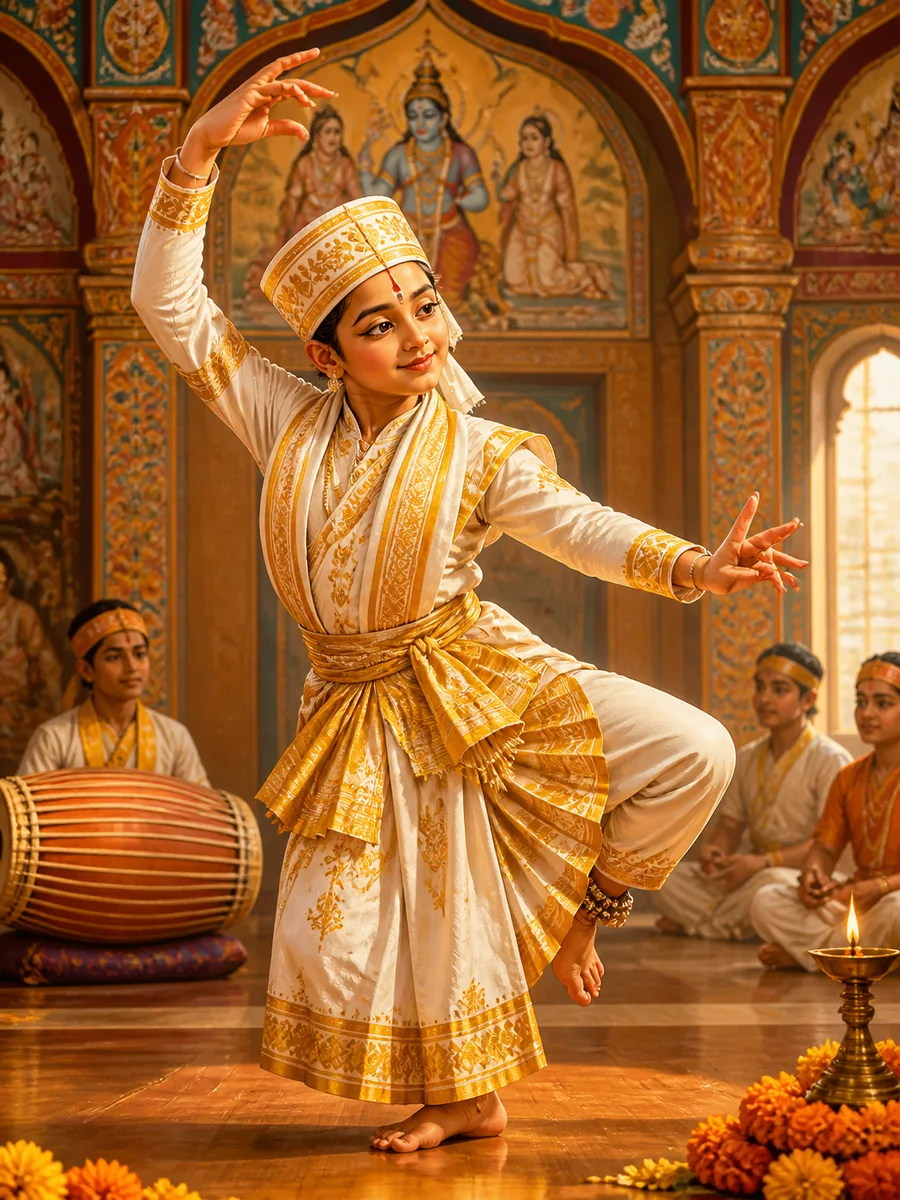
Temple dancers called maharis danced for the god Jagannath. Boys called gotipuas also danced in the temples.
On the walls of the Sun Temple at Konark there are stone carvings of dancers. Odissi dancers still use poses like those.
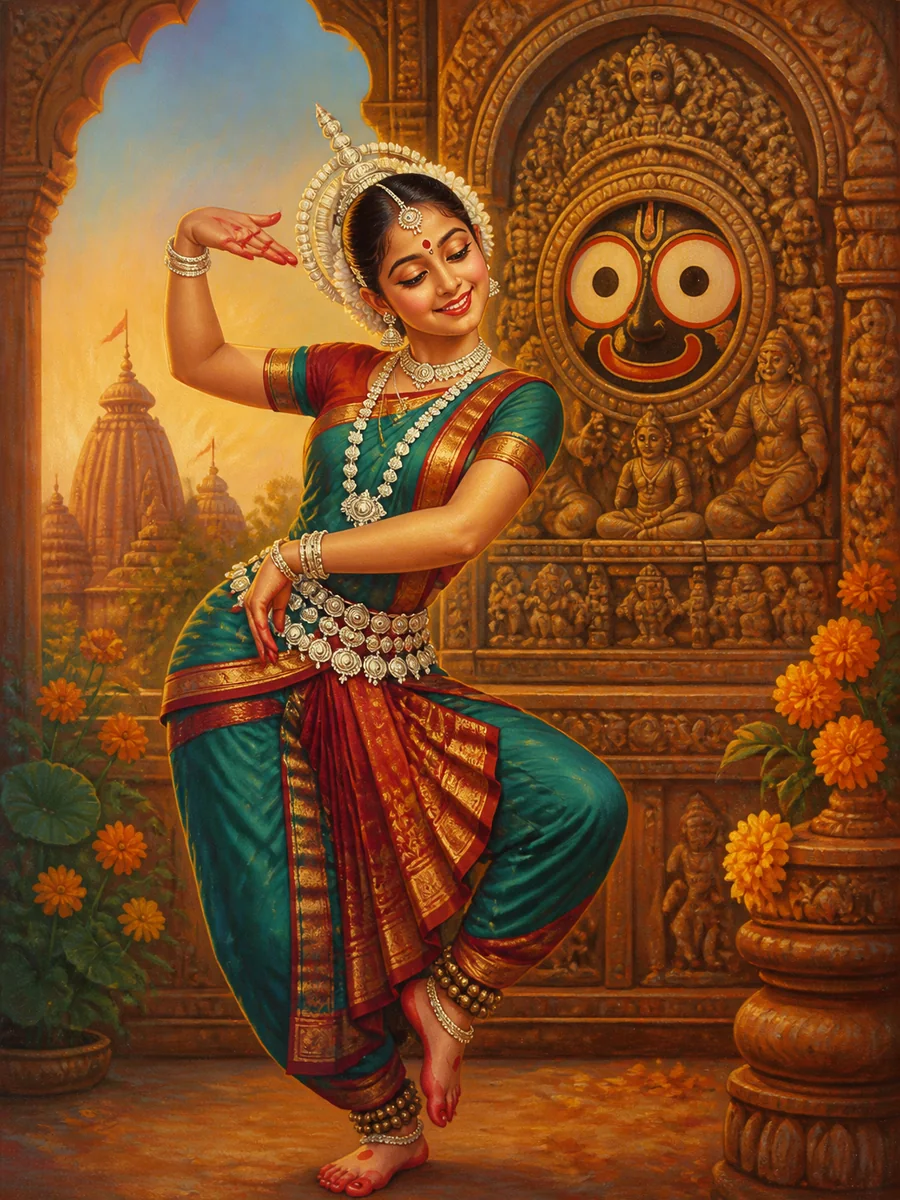
Odissi’s special pose is the tribhangi. The body bends in three places: at the neck, the waist and the knee. It looks like a gentle S.
Another pose is the chauka, a square stance, as if you were holding a big box between your arms and legs.
Many Odissi pieces are set to the Gita Govinda, a poem from the 12th century about Radha and Krishna. Dancers wear silver jewellery and a headpiece shaped like a temple.

Odissi: Temple Carvings Come Alive
Soft curves and gentle poses, like the stone dancers of Konark.
Learn more
Facts, a quiz and words to knowDid you know?
- The Sun Temple at Konark in Odisha is a UNESCO World Heritage Site, and its walls show carved dancers.
- The Gita Govinda is a poem written by the poet Jayadeva in the 12th century.
- Tribhangi means three bends: the neck, the waist and the knee.
- The temple dancers of Odisha were called maharis, and the boy dancers were called gotipuas.
Quick quiz
1How many bends are in the tribhangi?
- Three
- Two
- Five
Show the answer
A. Three. Neck, waist and knee.
2Which temple has carvings of dancers?
- The Sun Temple at Konark
- The Taj Mahal
- The Red Fort
Show the answer
A. The Sun Temple at Konark. Konark’s walls show dancers in stone.
3What is the chauka?
- A square stance
- A fast spin
- A drum
Show the answer
A. A square stance. The chauka is a square, balanced stance.
Words to know
- Tribhangi
- The pose with three bends
- Chauka
- The square stance
- Mahari
- A temple dancer of Odisha
- Gotipua
- A boy dancer of Odisha
Think and do
Talk about it. Where have you seen an S-shaped curve?
Try it. Stand tall, then bend a little at the neck, the waist and one knee. You have made a tribhangi!
Remember: Seeing beauty in gentle curves.
Up next
Written for children from well-known public sources, including the Sangeet Natak Akademi and UNESCO. Dates are approximate, and every dance has several schools and styles; this series tells the main ideas.